Written by Alex Ren
Updated on 15 min read
The signs of burnout at work, what it actually feels like, and what genuinely helps
Quick summary Burnout gets used for everything now, from a hard fortnight to a career that has quietly stopped working. That vagueness is a problem, because the signs that actually matter are specific, and because the honest version of this article has to say something no productivity blog wants to say: if your job is genuinely overloaded, no habit fixes it. Here is what burnout is defined as, the signs worth taking seriously, how it differs from ordinary tiredness and from depression, and what the evidence says helps, in the order it helps.
This is general information rather than medical advice. It is written for people who work at a screen all day, which is the population I know, and it comes with a bias I should declare early: I build a break app, so I have an obvious interest in telling you breaks matter. They do, and they are also nowhere near the top of the list below. That order is the useful part.
What burnout actually is, and what it is not#
The definition worth knowing comes from the World Health Organization, which included burn-out in the eleventh revision of the International Classification of Diseases. Two details in it change how you should think about the word. First, burn-out is classified as an occupational phenomenon and explicitly not as a medical condition: it sits in the chapter about factors influencing health status, not in the chapter of diseases. Second, the WHO says the term refers specifically to phenomena in the occupational context and should not be used for experiences in other areas of life. You are not burnt out on your family, on the news, or on life. You burn out at work.
The definition itself is a syndrome resulting from chronic workplace stress that has not been successfully managed, with three dimensions. Those three are the actual signs, and they are more specific than the tiredness people usually describe.
- Energy depletion or exhaustion. Not a bad week, and not fixed by one good night. It is the fatigue that survives a weekend and comes back an hour into Monday.
- Mental distance from the job, cynicism, negativism. The colleague who used to care starts saying nothing works here, and means it. This one is often visible from the outside before the person notices it.
- Reduced professional efficacy. The sense that you are producing less and worse, along with the reality that you often are, because the first two dimensions cost you the attention the work needs.
The practical consequence of that classification: you cannot really be diagnosed with burnout the way you can be diagnosed with anaemia. What a doctor can do is check whether something else explains the exhaustion (thyroid problems, anaemia, sleep apnoea, depression), and treat what is treatable. That is a reason to go, not a reason to skip going.
The signs of burnout at work, beyond being tired#
Exhaustion is the symptom everyone knows, so it is the least discriminating. The signs below are the ones people tend to notice in hindsight, when they look back at the six months before they finally stopped.
- Sunday afternoon dread that starts earlier every week, and eventually arrives on Saturday.
- Cynicism that has become your default register: every new project is pointless, every meeting is theatre, every plan is naive. Notice it especially if you did not use to talk like this.
- Small tasks feeling enormous. A two-line email sits unanswered for three days, not because you are lazy but because the activation cost has gone up.
- Rest that does not restore. You sleep nine hours, take the weekend, and feel identical on Monday morning.
- Emotional flattening or a short fuse, often both in the same week, and usually spilling into home life first because that is where the guard is down.
- Detachment from the people at work, including the ones you like: fewer messages, camera off, the meeting you used to enjoy now a thing to survive.
- Physical symptoms that track the working week: headaches, tension in the neck and shoulders, stomach trouble, disturbed sleep. The NHS lists exactly these among the signs of stress, which is worth knowing, because people dismiss the physical version as unrelated.
- A steady drop in the quality of your work, which you can see, and which you have started hiding.
| Ordinary tiredness | Burnout | Depression | |
|---|---|---|---|
| Where it points | A specific push: a launch, a deadline | The job, its conditions, its pace | Everything, including what you used to enjoy |
| Does rest fix it | Yes, a weekend or a week does it | Not really, it comes back within hours | No, and rest can feel worse |
| How it feels | Tired but still yourself | Empty, cynical, professionally useless | Low mood, loss of pleasure, hopelessness |
| Off work, on holiday | You recover and want to go back | You recover slowly and dread returning | The mood travels with you |
| What it needs | Sleep and a lighter week | Changed working conditions, then recovery | Professional assessment and treatment |
That table is a way of asking yourself better questions, not a diagnostic tool, and the third column is the one to take seriously. Burnout and depression overlap heavily in how they feel, and telling them apart is a job for a professional rather than for a blog. If your low mood follows you into the parts of life you used to enjoy, that is the signal to book an appointment rather than to reorganise your calendar.
What does burnout feel like from the inside?
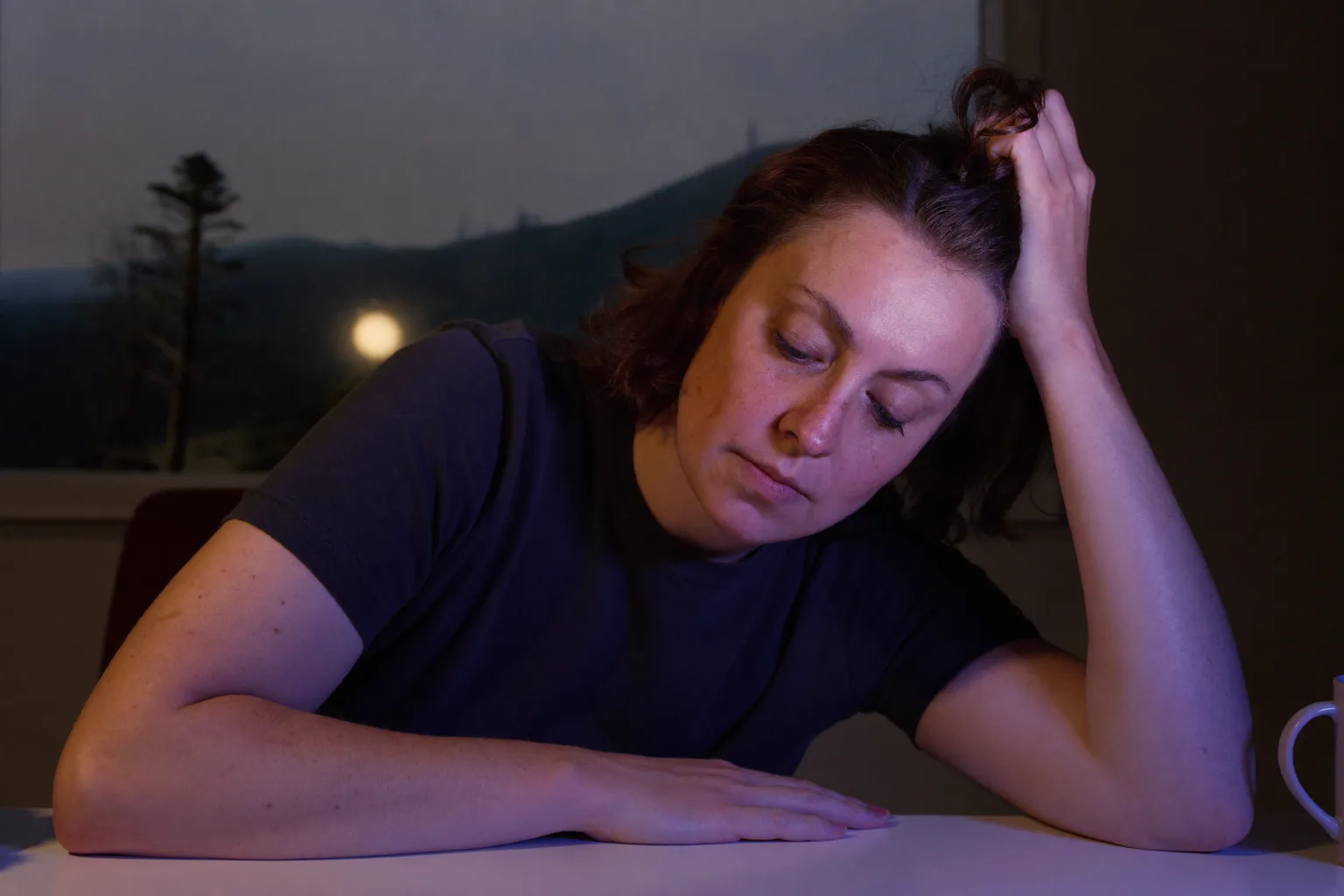
People who have been through it rarely describe drama. They describe flatness. The work is still there, the hours are still going in, and something that used to be automatic now takes deliberate effort: caring. There is often a specific moment people remember, and it is small. Reading the same paragraph four times. Sitting in the car outside the house, not going in. Realising you have been staring past the screen for ten minutes and could not say what you were thinking about. The exhaustion is real, but the part that frightens people is the indifference, because it feels like a change in who they are rather than a state they are in.
Why working from home raises the risk#
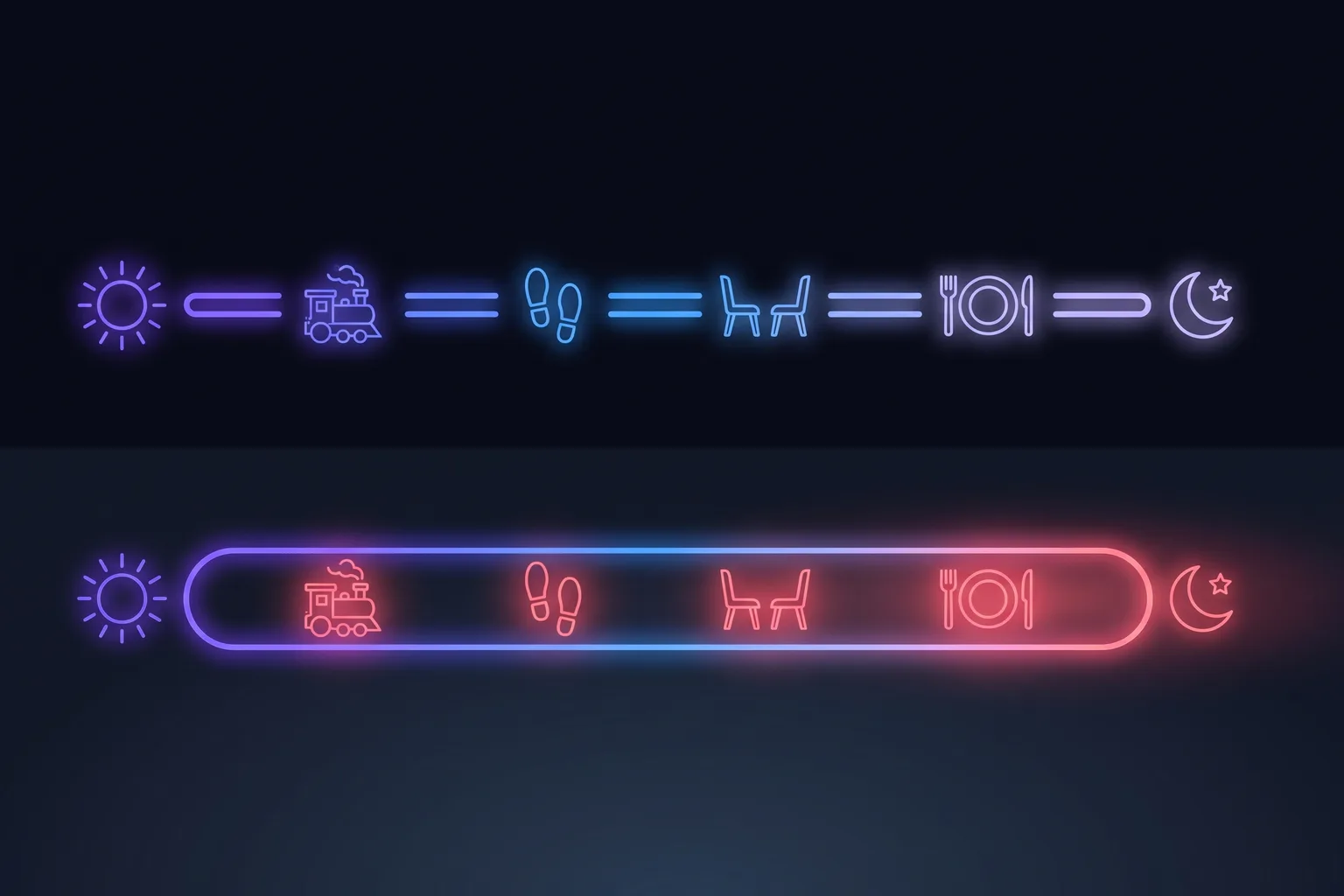
Remote work did not invent burnout, but it removed several of the brakes. The commute was a decompression ritual nobody designed on purpose and everybody benefited from. The office had a moment when the room emptied and you left with it. At home, the day has no edges, and the evidence says it quietly expands: analysing meeting and email metadata from over three million users across sixteen cities, researchers found the average workday grew by 8.2%, roughly 48.5 minutes after lockdowns began. Eurofound's work points the same way, finding that teleworkers are about twice as likely to exceed the 48-hour working time limit and to work in their free time.
Add the second effect we wrote about separately, that working from home adds two to three hours of daily screen time, and you get the specific shape of remote burnout: not a heroic crunch, but a day with no boundary that repeats for eighteen months.

What actually helps, in the order it helps#
Here is where most articles hand you a list of self-care tips. The evidence does not support putting those first. In a systematic review and meta-analysis of controlled interventions to reduce burnout in physicians, the interventions directed at the organisation, structural changes to workload, schedules and teamwork, outperformed the ones directed at the individual. Doctors are not everyone, but the direction of that finding matches what the definition already implies: if the cause is chronic workplace conditions, the fix has to touch the conditions.
- Change something structural, even something small. Fewer concurrent projects, one recurring meeting killed, a deadline renegotiated, a role clarified, help asked for out loud. This is the uncomfortable step people skip because it involves a conversation with a manager, and it is the step with the most behind it.
- Protect recovery outside work, deliberately. The research construct here is psychological detachment: mentally switching off from work during off hours. A meta-analysis found detachment is associated with lower fatigue and exhaustion, better sleep and better wellbeing, and a later meta-analysis of interventions found detachment can genuinely be trained, with a small to moderate effect. It is a skill, not a personality trait.
- Put recovery inside the working day too, not only after it. A meta-analysis of 22 studies on micro-breaks, short pauses of ten minutes or less, found they reduce fatigue and increase vigour, while being honest that recovering from deeply depleting work needs more than ten minutes. Small breaks are not a cure. They are what stops an ordinary hard week from compounding.
- Defend sleep before anything else on this list, because every other item works better rested and none of them work on five hours.
- Rebuild one boundary at a time. A finishing ritual, a phone that does not carry work, an evening the laptop stays shut. Our companion piece on work-life balance when you work from home is the practical version of this.
- Get professional help early rather than late, which is the section further down.

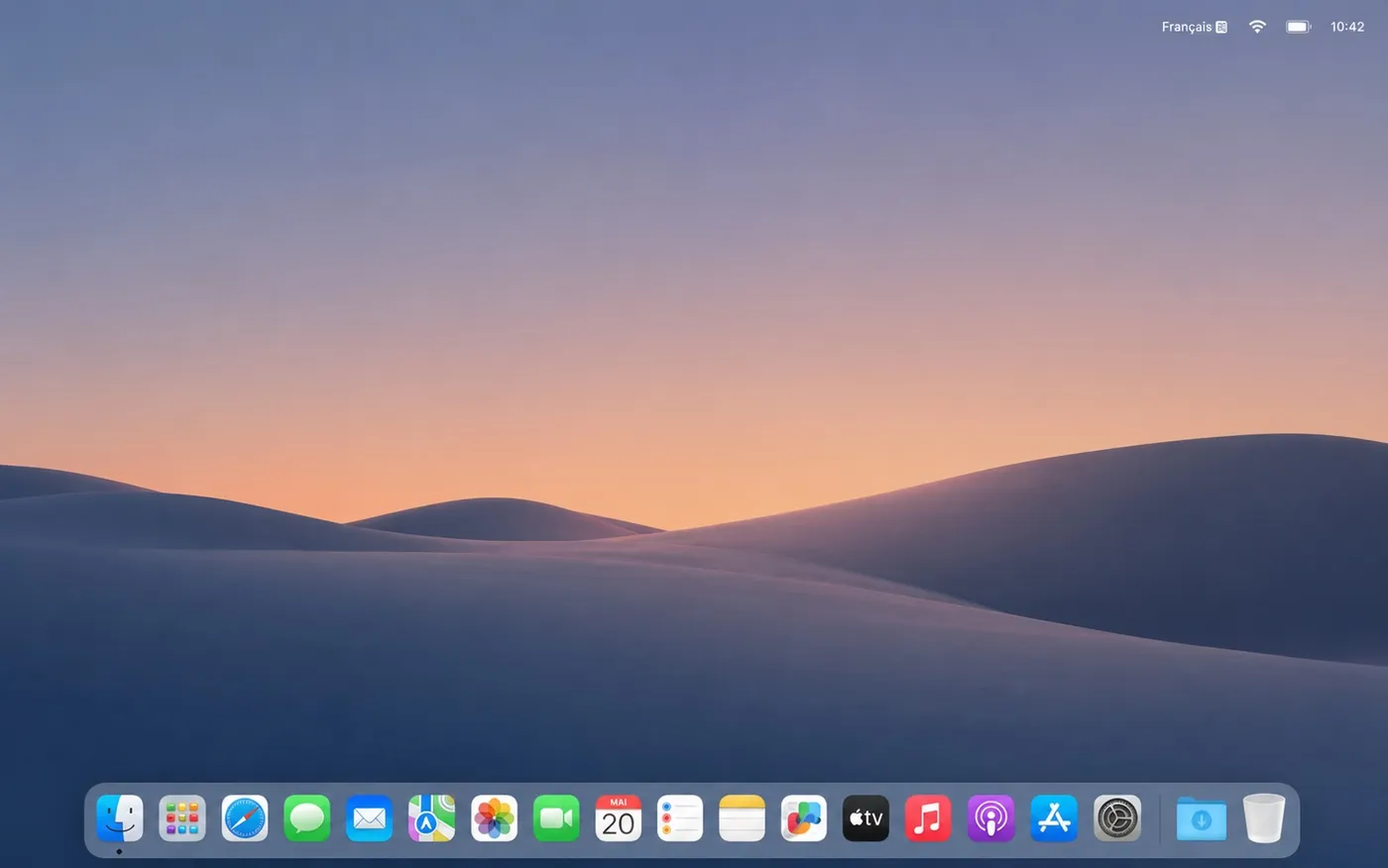
Look into the distance.
Fix on a point on the horizon and let your eyes settle.
00:20
Press Esc twice to skip the break
That last point is where Pausr fits, and it fits narrowly, so let me be precise about it. A break app does not fix an overloaded job, a bad manager or a role with impossible expectations. Nothing on your Mac fixes those. What it fixes is the specific failure where you intend to take breaks and never do, because deep focus is exactly the state in which you stop noticing time. Pausr runs a short break every 20 minutes and a longer stand-up break less often, announces each one a few seconds ahead, and holds it automatically during meetings, screen shares and games. It keeps an honest count of your screen time and your breaks, with no streaks and no guilt when you skip one, which matters more than it sounds when you are already running on empty. It is macOS-only, fully local, and needs no account.
How to recover from burnout, realistically#
Recovery is slower than people expect and it is not linear. Two weeks off helps and rarely finishes the job, because a holiday pauses the exposure without changing it: if you return to the same load, the same pace and the same expectations, the clock restarts. The people who actually come back well tend to have three things in common. They changed something in the work itself rather than only around it. They rebuilt sleep and detachment first, before productivity. And they went slower on the return than they wanted to, because the first good week feels like proof you are fine and is usually not.
One more thing that helps and is easy to miss: tell one person. Burnout is unusually good at convincing people it is a personal failing, which makes them hide it, which removes the one thing that reliably reduces it. A manager who knows can change a deadline. A manager who does not know cannot.
When to stop reading articles and get help#
See a doctor rather than another productivity system if any of the following is true. The NHS advice is simply to see a GP if you are struggling to cope with stress, and that bar is deliberately low.
- The exhaustion has stopped tracking your working week and is there on holiday, at weekends, and around people you enjoy.
- Low mood, loss of interest or hopelessness has come along with the tiredness, which points at depression rather than at your workload.
- Sleep has broken down for weeks, or you are waking at four every morning with your chest going.
- Physical symptoms are persistent: chest pain, palpitations, headaches or stomach trouble that has not been checked.
- Alcohol, food or anything else has become the way you get through the evening.
- You are struggling to cope, which is the NHS's own threshold and does not require you to justify it further.
If you ever have thoughts of harming yourself, that is not a work problem to manage on your own: contact your local emergency services or a crisis line straight away. In the UK that is 999, or 111 for urgent but non-emergency help.
Frequently asked questions
What are the first signs of burnout at work?
What is the difference between burnout and stress?
Is burnout a medical diagnosis?
What does burnout feel like?
How long does it take to recover from burnout?
Can taking breaks prevent burnout?
Why does working from home make burnout more likely?
Should I tell my manager I think I am burning out?
Sources & further reading
- World Health Organization: Burn-out an occupational phenomenon, International Classification of Diseases (ICD-11)
- NHS: Stress, symptoms and when to get help
- Panagioti et al., Controlled Interventions to Reduce Burnout in Physicians: a systematic review and meta-analysis, JAMA Internal Medicine (2017)
- Albulescu et al., Give me a break! A systematic review and meta-analysis on the efficacy of micro-breaks for increasing well-being and performance, PLOS ONE (2022)
- Wendsche and Lohmann-Haislah, A Meta-Analysis on Antecedents and Outcomes of Detachment from Work, Frontiers in Psychology (2017)
- DeFilippis et al., Collaborating During Coronavirus: The Impact of COVID-19 on the Nature of Work, NBER (2020)
- Mayo Clinic: Job burnout, how to spot it and take action
- Maslach Burnout Inventory, the instrument the three burnout dimensions come from