Written by Alex Ren
Updated on 15 min read
Neck pain from desk work: why it builds through the day, and what actually gives relief
Quick summary Neck pain from desk work has a schedule. It is absent in the morning, present by mid-afternoon, and by six it has spread into the shoulders and sometimes up the back of the skull into a headache. That schedule is the most useful thing about it, because it tells you the problem is not your spine wearing out. It is hours of holding your head in one position with almost no movement. Here is what each pattern points to, what the evidence says about posture (less than you have been told), and the neck pain relief that actually holds up, from the version that works in ten minutes to the version that works in ten weeks.

In this article
- Why a desk day produces neck pain
- What your particular pattern points to
- Relief today: what helps in the next ten minutes
- Neck exercises: which ones are actually worth your time
- The lasting fix: interrupt the hold, on a schedule
- When neck pain needs a professional, not a stretch
- Frequently asked questions
The reassuring baseline first: neck pain is extremely common, and the NHS notes that most neck pain lasts only a few weeks and settles with simple self-care. This article is general information rather than medical advice, and the last section covers the small number of symptoms that deserve a same-day opinion instead of a stretch.
Why a desk day produces neck pain#
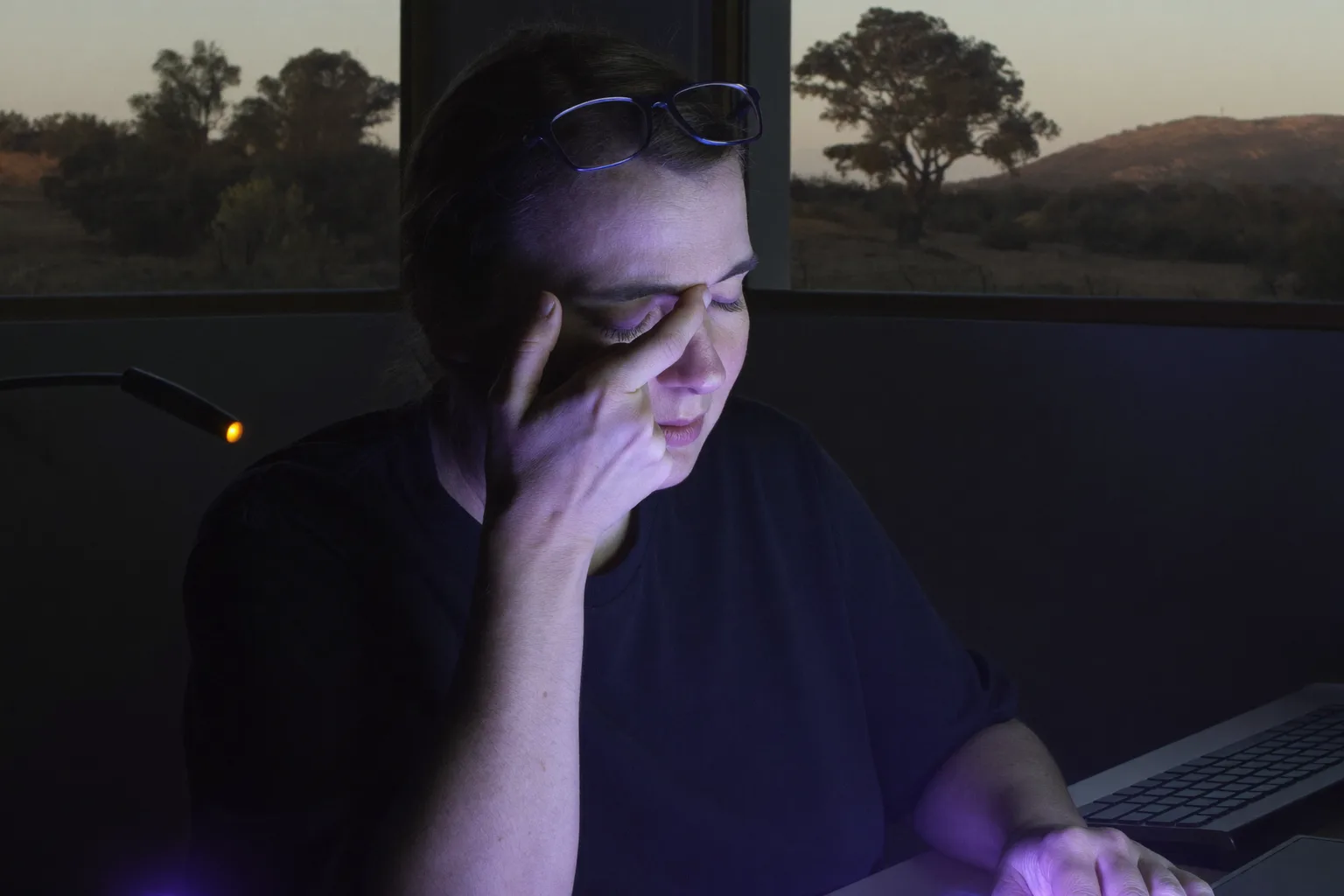
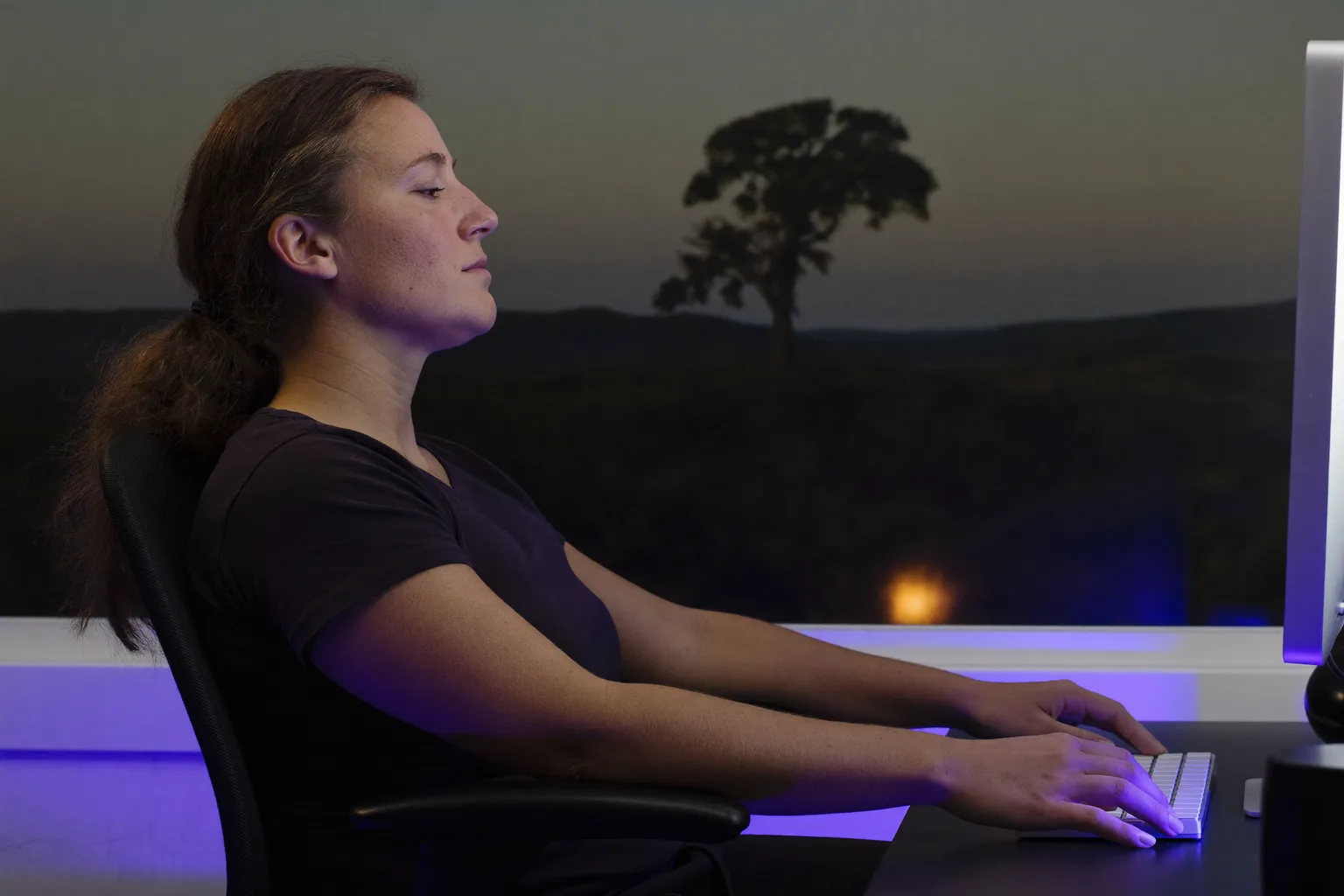
Your head weighs about five kilos and sits on top of a stack of small joints, held there by muscles that were designed to keep adjusting. A screen removes the adjusting. You settle into one position, your eyes lock onto one plane, and the muscles at the back of your neck and across your shoulders hold a low-level contraction for hours without ever fully releasing. Muscles tolerate hard work far better than they tolerate holding still. That is why the ache builds slowly, why it arrives in the afternoon rather than the morning, and why it eases on days you are moving around.
The reviews of office workers point at the same trio of factors: hours spent at the computer, prolonged sitting, and time spent with the neck flexed forward. A 2022 systematic review in the Journal of Healthcare Engineering lists exactly those as the most common risk factors for neck pain among office workers, while also being candid that the evidence linking sedentary work as such to neck disorders is limited rather than conclusive. Duration and immobility, in other words, look more important than the exact geometry of how you sit.
About that "60 pounds of pressure" figure
You have probably seen the graphic: tilt your head forward 60 degrees and you load your neck with 60 pounds, the weight of an eight-year-old child. It comes from a 2014 paper by Kenneth Hansraj in Surgical Technology International, and it is worth knowing what it actually was: a computer model of a cervical spine, not a measurement taken from people, and not a study of who ends up in pain. It is a useful intuition about leverage, and it has been stretched into a moral panic about posture. If perfect posture were the answer, we would have solved office neck pain years ago with better chairs. Treat head-down phone time as one more source of sustained static load, which it certainly is, rather than as an injury counter ticking up towards surgery.
What your particular pattern points to#
Neck pain is not one thing, and where it sits tells you what to do about it.
| Where it hurts | Usual cause | The tell | First move |
|---|---|---|---|
| Across the back of the neck and top of the shoulders | Sustained static load | Absent in the morning, worst by late afternoon | Movement breaks, screen at eye level |
| Base of the skull, sometimes with a headache | Suboccipital tension, cervicogenic headache | Pressing the spot reproduces the headache | Chin tucks, heat, breaks from forward head posture |
| One side only, stiff on turning | Sleep position, mouse side, phone cradling | Arrived overnight or after a specific day | Gentle movement, heat, change the trigger |
| Neck pain with pain, tingling or weakness down one arm | Nerve root irritation (cervical radiculopathy) | Changes when you turn or tip your head | See a clinician rather than self-treating |
| Neck plus jaw, temples, worse under deadline | Clenching and stress-related muscle tension | Worse in busy weeks, better on holiday | Treat the load and the sleep, not just the neck |
Pain at the base of the neck and skull
The band where the neck meets the skull is the classic desk-worker sore spot. The small suboccipital muscles there do the fine work of holding your head level, and when your screen is low they spend the day quietly straining to tip your gaze up. The result is a deep, tender ache right under the skull, often with a couple of points that feel exquisite when you press them. Two things reliably reduce it: raising the screen so the top of it is roughly at eye height (a stack of books works), and interrupting the hold often enough that the muscles get to let go. Heat helps in the moment, and so does a slow chin tuck, described below.
Neck pain and headache together
When a headache starts in the neck and spreads forward, usually on one side, over the ear and behind the eye, it may be a cervicogenic headache: a headache whose source is the neck rather than the head. The giveaways are that it is one-sided in a consistent way, it is aggravated by neck movement or by sustained positions, and pressure on the upper neck can reproduce it. This is one of the situations where exercise has decent support, since Cochrane found moderate quality evidence for strengthening and endurance exercise of the neck, shoulder and shoulder blade region in cervicogenic headache. Worth noting for anyone who spends their day at a screen: a headache that builds in the afternoon can also be eye strain rather than neck strain, and the two happily coexist, because both are produced by staring at one thing for hours.
Neck pain on one side only, left or right
One-sided neck pain is usually simpler than it feels, and people search anxiously for a meaning in the side. There is not one: left and right have the same short list of causes. Sleeping in an awkward position is the most common, which is why it so often appears on waking and eases over a few days. After that comes asymmetry in the working day: the arm that holds the mouse, a second monitor placed off to one side so the head is permanently rotated, a phone cradled against the shoulder, a bag always carried on the same side. If it turned up overnight, keep moving gently and give it a few days. If it arrived at your desk, look for what is asymmetric in the setup and fix that.
Relief today: what helps in the next ten minutes#
For ordinary desk-related neck pain, the short-term measures are mundane and effective. The NHS self-care list is a good baseline, with one instruction that matters more than the rest: keep the neck moving. Resting a sore neck rigidly, or reaching for a collar, tends to make it stiffer.
- Move it gently, now. Slow turns left and right, slow ear-to-shoulder tilts, a few shoulder rolls. Go to the edge of comfort, not into pain.
- Apply heat for muscle ache, typically 15 to 20 minutes, or cold if the pain is sharp and recent. Never put either directly against skin.
- Stand up and walk for two minutes. The neck is at the top of a chain: hips and thoracic spine that have not moved in three hours make the neck do all the work.
- Fix the obvious geometry: top of the screen near eye height, monitor straight ahead rather than off to one side, laptop raised with an external keyboard, phone lifted towards your eyes instead of your chin dropped to your chest.
- Painkillers if you need them, paracetamol or an anti-inflammatory such as ibuprofen, used for a short stretch to let you keep moving normally rather than as the plan itself.
- Check your pillow. A pillow should fill the gap between head and shoulders so the neck stays in line with the spine. Sleeping face down keeps the neck rotated all night and is worth breaking as a habit.
Neck exercises: which ones are actually worth your time#
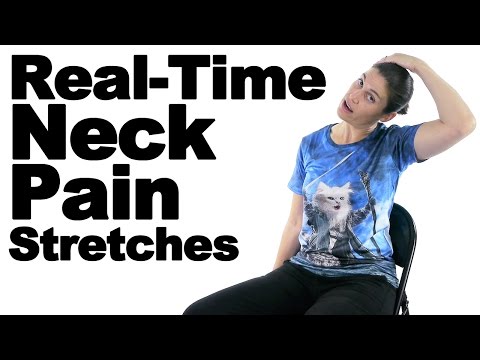
Here the evidence is more specific than most articles admit. The Cochrane review of exercise for mechanical neck disorders found that strengthening the neck, shoulder and shoulder blade region helped chronic neck pain, while stretching alone had minimal effect, and it was honest that the overall quality of evidence remains low. A later review reached a similar conclusion, that motor control work combined with targeted exercise gives the largest pain reductions, while the optimal dose is still unknown. The practical translation: stretching feels lovely and buys twenty minutes, strengthening changes the trend over weeks. Do both, and stop expecting the stretch to be the cure.
- Chin tuck. Sitting tall, draw your chin straight back as if making a double chin, without tipping your head down. Hold 5 seconds, repeat 10 times. This is the one that targets the deep neck flexors most desk workers have let go quiet.
- Shoulder blade squeeze. Draw the shoulder blades down and together, hold 5 seconds, repeat 10 times. The mid-back muscles are the ones that stop your shoulders creeping forward all afternoon.
- Neck rotation and side bend, slowly, to the edge of comfort, 5 each way, several times a day. This is the mobility half, and it is what makes the first hour after a break feel different.
- Wall angels or a doorway chest stretch, 30 seconds, to counter the closed-up front of the chest that a keyboard day produces.
- Anything that loads the upper back, rows, band pull-aparts, carrying something heavy, twice a week. This is the part with the real evidence behind it, and the part everyone skips.
The lasting fix: interrupt the hold, on a schedule#
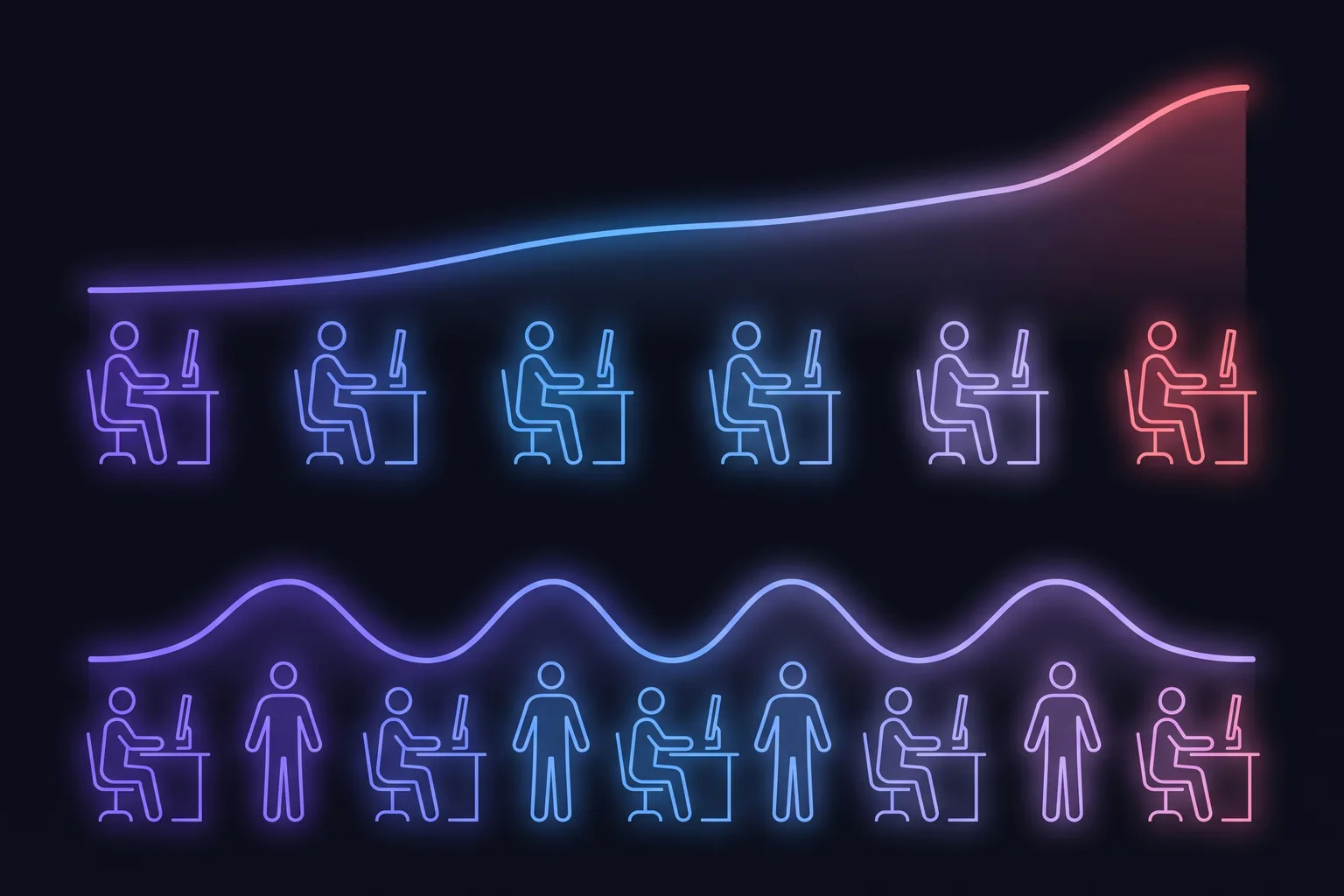
If duration of static loading is the mechanism, then the intervention is not a better chair, it is a shorter uninterrupted stretch. That is the least glamorous conclusion available and also the best supported one. In an Applied Ergonomics study of computer terminal work, microbreaks reduced discomfort in every region measured, best at 20-minute intervals, with no cost to productivity. Not longer breaks. More of them.
Which runs into the obvious problem: nobody remembers. Deep focus is exactly the state in which you do not notice that 90 minutes have gone by and your shoulders are somewhere near your ears. Knowing the rule has never once made me follow it, and I have been at this for five years. We compared the main break rhythms, 52/17, Pomodoro and 90-minute blocks, and for musculoskeletal comfort specifically, frequency beats structure every time.
That is why Pausr exists. It runs a short break every 20 minutes and a longer stand-up break less often, announces each one a few seconds ahead so you can finish your thought, and holds it automatically when you are in a meeting, sharing your screen or gaming, so the reminder never becomes the thing you fight. Twenty seconds is enough to drop your shoulders, turn your head both ways and look out of a window, which also happens to be what your eyes need. It is macOS-only, fully local, needs no account, and keeps an honest count of your day without streaks or guilt when you skip one.

Next break
12:47
Look away
Coming up
- Stand up31 min
- Step away1 h 14
When neck pain needs a professional, not a stretch#
Most desk neck pain is exactly what it looks like. A few presentations are not, and the difference is usually company: what the neck pain arrives with.
- Pain, numbness, tingling or weakness travelling down an arm, or a grip that has become clumsy. That points to nerve involvement and needs an exam. It is also the pattern most often mistaken for carpal tunnel syndrome.
- Neck pain that has not improved after a few weeks of sensible self-care, or that keeps getting worse rather than settling.
- Pain following a fall, a crash or a blow to the head, which should be assessed rather than stretched.
- A stiff neck with fever, a severe headache, a rash, dislike of bright light or confusion, which needs urgent medical help, since these are among the signs of meningitis.
- Neck pain with unexplained weight loss, night sweats, or a history of cancer, which deserves prompt review.
- Problems with balance, walking, or bladder and bowel control alongside neck symptoms, which are emergency signs.
Short of those, the plan is unglamorous and it works: keep moving, break up the static holding many times a day, strengthen the upper back over a few weeks, and give it time. In many places you can refer yourself to an NHS physiotherapy service without a GP appointment, which is worth knowing if the pain is dragging on.
Frequently asked questions
Why does my neck hurt after a day at the computer?
How do I relieve neck pain fast?
What causes pain at the base of the neck and skull?
Can neck pain cause a headache?
Why does only one side of my neck hurt?
What are the best exercises for neck pain?
How can I reduce neck pain naturally without painkillers?
When should I worry about neck pain?
Sources & further reading
- NHS: Neck pain and stiff neck
- Gross et al., Exercises for mechanical neck disorders, Cochrane Database of Systematic Reviews (2015)
- Guduru et al., The Ergonomic Association between Shoulder, Neck/Head Disorders and Sedentary Activity: A Systematic Review, Journal of Healthcare Engineering (2022)
- Price et al., Effectiveness and optimal dosage of exercise training for chronic non-specific neck pain, PLOS ONE (2020)
- McLean et al., Computer terminal work and the benefit of microbreaks, Applied Ergonomics (2001)
- NHS: Meningitis
- Mayo Clinic: Office ergonomics, your how-to guide
- OSHA: Computer workstations eTool