Written by Alex Ren
Updated on 12 min read
Work-life balance when you work from home: the boundaries that actually hold
Quick summary Nobody loses their work-life balance in a single decision. It goes one small concession at a time: answering at 21:00 because it was quicker, opening the laptop on Sunday because the week looked heavy, moving lunch to the desk because a meeting ran over. Working from home accelerates all of it, for a structural reason rather than a moral one: the office provided boundaries for free, and your flat does not. Here is what the research says about why the home day stretches, which boundaries actually hold, and how to switch off when work lives eight steps from your bed.
One thing to get out of the way, because it shapes everything below. Work-life balance is treated as a discipline problem, and for most remote workers it is a design problem. You are not weak-willed for working until 19:30 in a room where nothing tells you the day is over. The fixes that work are the ones that put the boundary back into the environment, so it stops depending on how you feel at 18:00 on a Thursday.
Why the working day stretches at home#
The evidence is unusually concrete here. Researchers analysing meeting and email metadata from more than three million people across sixteen cities found that after lockdowns began, the average workday grew by 8.2%, about 48.5 minutes. Not because anyone decided to work longer, but because the day lost its ends. Eurofound's research on telework points the same way, finding teleworkers roughly twice as likely to exceed the 48-hour working time limit and to work in their free time.
It helps to see what the office was actually doing for you, since none of it was in your job description.
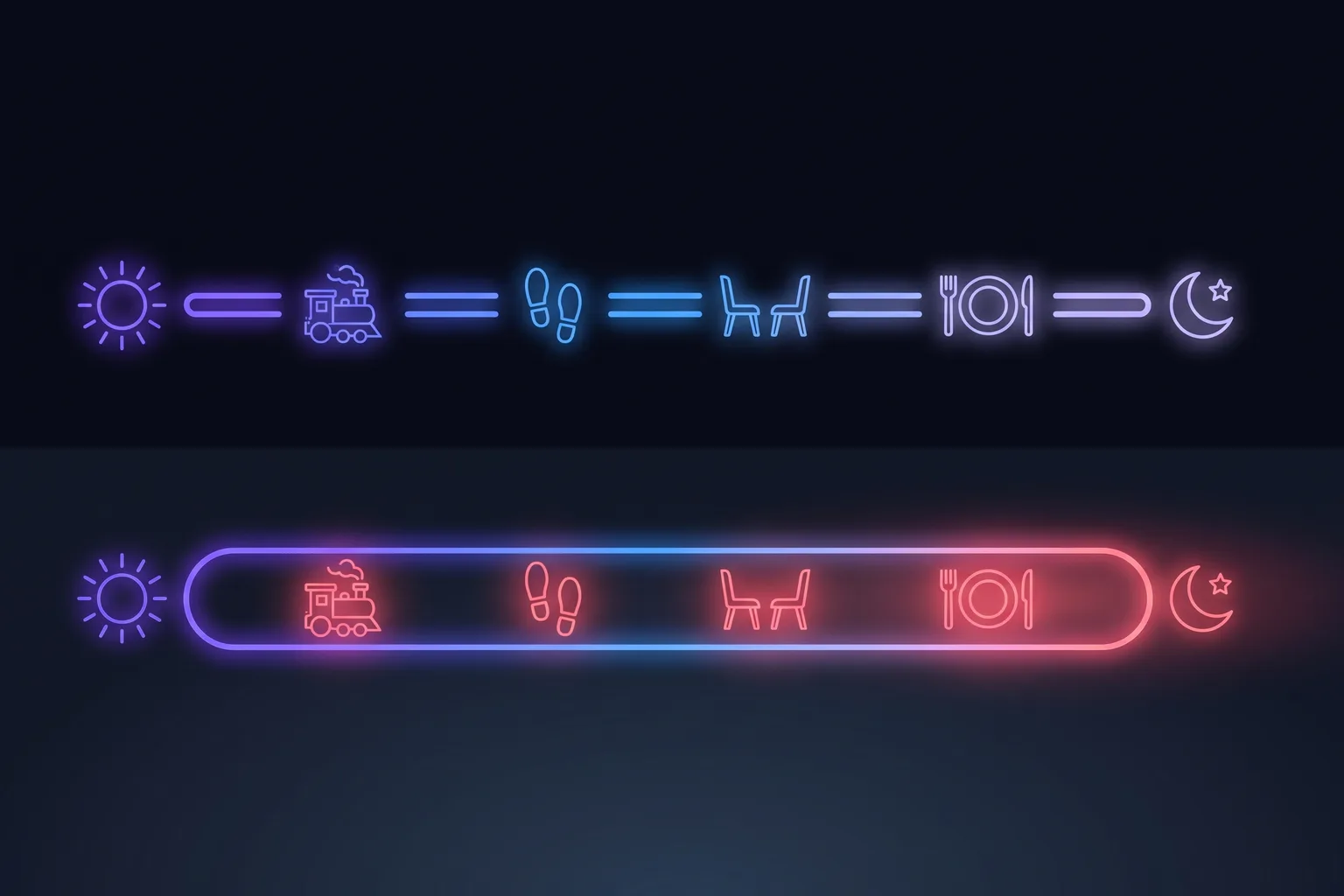
| The boundary that disappeared | What it used to do | What replaces it |
|---|---|---|
| The commute | Twice-daily decompression, a mental door | A ten-minute walk at the same times, in and out |
| The room emptying at 18:00 | A visible, social end to the day | A fixed shutdown ritual you always perform |
| Physical separation of desk and sofa | Places meant different modes | One work zone, and a laptop that closes |
| Colleagues going to lunch | A real midday break, away from the screen | Lunch blocked in the calendar, eaten elsewhere |
| Leaving the work phone at work | Evenings genuinely out of reach | Notifications off by schedule, not by willpower |
The thing that matters most has a name: detachment#
Occupational psychology has a precise construct for switching off, and it is not the number of hours you work. It is psychological detachment: mentally disengaging from work during non-work time, not thinking about the deadline while cooking. A meta-analysis of the research found detachment is associated with less fatigue and exhaustion, better sleep and better wellbeing, both in the short term and over time. In other words, an evening spent physically at home while mentally at work does very little for you.
The encouraging part is that detachment behaves like a skill rather than a personality trait. A meta-analysis of interventions designed to improve it found a real, if modest, effect: people can be taught to switch off. That is the whole justification for rituals that look silly on paper, like walking around the block to arrive home from a room you never left. They work because they give your brain a signal it can act on.
Work-life balance tips for remote workers that survive a real week#
Ranked roughly by how much they hold up when the week goes badly, which is the only test that counts. Pick two, not eight: this list fails when people treat it as a programme.
- Build a fake commute. Ten minutes of walking before you start and after you finish. It is the single most reported replacement for the boundary you lost, and it works because it is a physical transition rather than a decision.
- Have a shutdown ritual and always finish it. Write tomorrow's first task, close every tab, shut the laptop, say something out loud if that helps. The ritual matters more than its content, because it is the signal that lets you stop rehearsing the day.
- Set a leaving time you tell someone about. Boundaries you have announced hold better than boundaries you have merely intended, in exactly the same way as a gym appointment with a friend.
- Make the workspace endable. If your desk is in the living room, at minimum the laptop closes and goes in a drawer at the end of the day. Visible work is an open loop, and open loops keep running.
- Take the lunch break away from the screen, for the length of an actual lunch. Eating at the desk while scrolling is neither work nor rest, and it is the most commonly skipped hour in remote work.
- Break the day into pieces on purpose. Short breaks through the day are what stop the evening starting from empty: a meta-analysis of 22 studies found micro-breaks reduce fatigue and increase vigour. Our comparison of break schedules like 52/17 and the Pomodoro technique covers how to pick a rhythm.
- Put work notifications on a schedule rather than on your self-control. Do Not Disturb from your finishing time to your start time, on both laptop and phone, is a five-minute setup that removes hundreds of individual decisions.
- Protect one full day a week with nothing work-shaped on it. Not a productive rest day. An actual one.
- Watch your screen time honestly, because remote work quietly adds hours to it and the extra hours are invisible from inside. We covered why working from home increases screen time and what that costs.

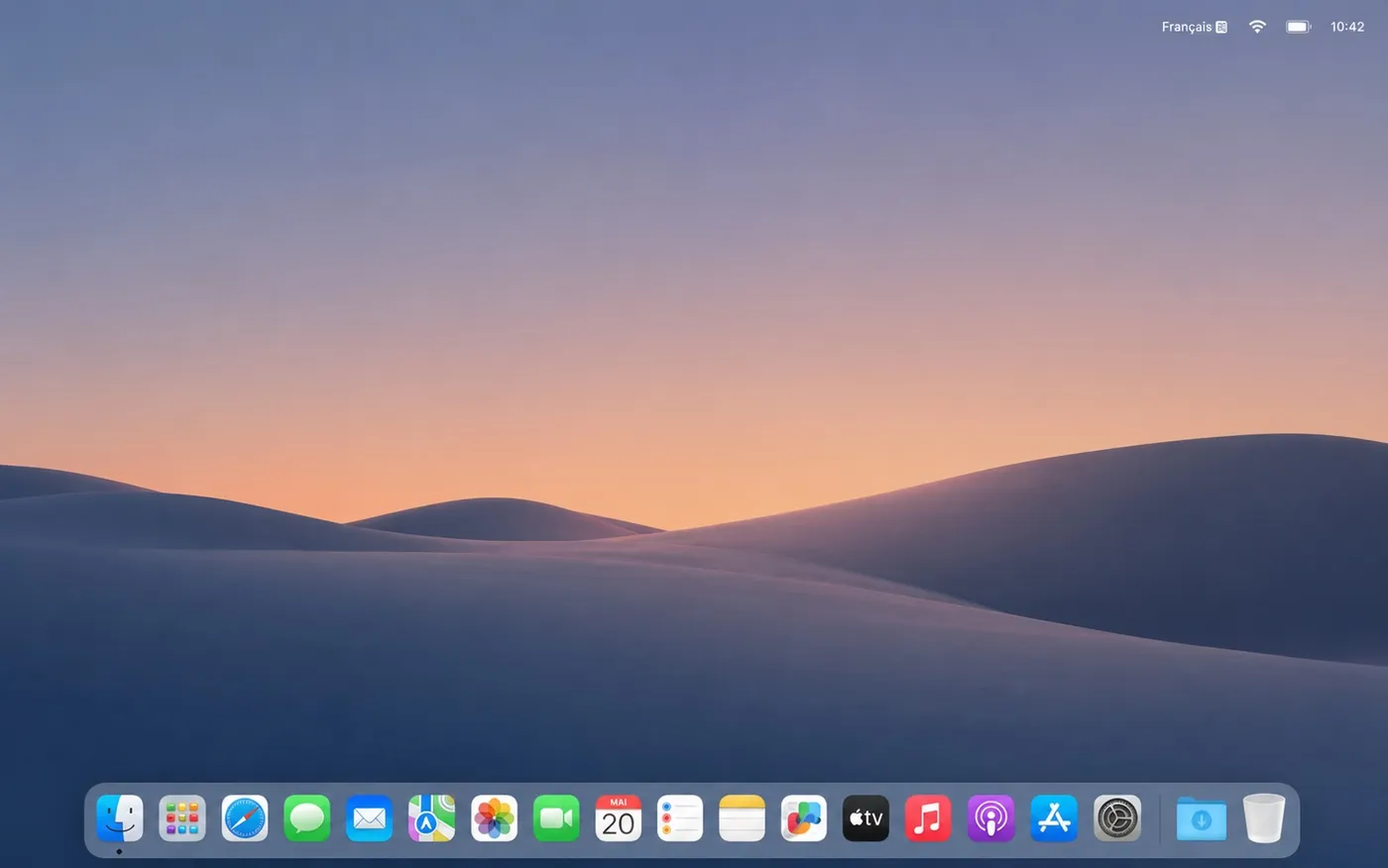
- Cursor2 h 14
- Microsoft Teams1 h 02
- Figma43 min
- Claude31 min
- Notion18 min





Two of those tips are the reason Pausr exists, and I built it because I was failing at both. It runs a short break every 20 minutes and a longer stand-up break less often, announces each one a few seconds ahead so you can finish your sentence, and holds it automatically during meetings, screen shares and games. It also keeps an honest count of your screen time and your breaks, which is the part that changed my behaviour most: a day that felt like six hours reading as nine is more persuasive than any advice. No streaks, no guilt when you skip one, macOS-only, fully local, no account.
What the right to disconnect does, and what it does not#
Several countries now have a right to disconnect, granting employees the right not to be reachable outside working hours. It is a real advance and it is worth knowing whether yours has one. It is also not a solution on its own: Eurofound's research at company level found that even in countries where such a right exists, only about half of the people covered by a company policy were aware of any action taken to implement it. A right that exists on paper and nowhere in the calendar changes very little.
The practical reading: use the policy if you have one, name it if you need to, and still build the local boundary yourself. Culture is set by what the team actually does at 20:00, and one manager who sends messages at that hour outweighs the paragraph in the handbook. If you lead a team, the highest-leverage thing available to you is to stop sending them, or to schedule them for the morning.
When it is not a balance problem#
There is a version of this that no boundary fixes, and it deserves naming, because articles like this one can make people feel that a bad situation is a personal failure. If the workload genuinely does not fit into the hours, a shutdown ritual just moves the anxiety. If rest has stopped restoring you, if cynicism has become your default register, if the tiredness is there on holiday too, you are probably looking at the signs of burnout rather than a scheduling issue, and the fix starts with the conditions rather than the routine. If low mood or loss of interest has come with it, that is a reason to see a doctor rather than to rearrange your calendar.
Frequently asked questions
What are the best work-life balance tips for remote workers?
Why is work-life balance harder when working from home?
How do I switch off from work in the evening?
Does a fake commute actually work?
How many hours should I work from home?
What is the right to disconnect?
Do short breaks really help with work-life balance?
How do I know if it is burnout rather than a balance problem?
Sources & further reading
- DeFilippis et al., Collaborating During Coronavirus: The Impact of COVID-19 on the Nature of Work, NBER (2020)
- Wendsche and Lohmann-Haislah, A Meta-Analysis on Antecedents and Outcomes of Detachment from Work, Frontiers in Psychology (2017)
- Albulescu et al., Give me a break! A systematic review and meta-analysis on the efficacy of micro-breaks for increasing well-being and performance, PLOS ONE (2022)
- Eurofound: Right to disconnect, implementation and impact at company level (2023)
- Eurofound and ILO: Working anytime, anywhere, the effects on the world of work (2017)
- World Health Organization: Burn-out an occupational phenomenon, International Classification of Diseases (ICD-11)
- Microsoft Work Trend Index: Great Expectations, making hybrid work work (2022)