Written by Alex Ren
Updated on 18 min read
How to sleep with neck pain: the position matters less than how long you hold it
Quick summary Sleep on your side or on your back, with your ear, shoulder and hip in one line, and a pillow that fills the gap between your head and the mattress without pushing your head past level. That is the standard answer, it is sensible, and every page on this question gives you some version of it. What none of them mention is what happened when researchers actually filmed people asleep: the ones who woke with a stiff neck were not lying differently from everyone else. They spent more than twice as long holding one awkward position without moving. The position is the smaller half of this. The stillness is the bigger one.
In this article
- How to sleep with neck pain tonight
- What happened when researchers filmed people sleeping
- How to sleep to avoid neck pain: setting the bed up once
- How to sleep with cervical neck pain that runs into the arm
- Why the night gets blamed for the day
- The lever nobody sells you: the sleep, not the bed
- When waking up with neck pain needs a doctor
- Frequently asked questions
The short version: side or back, neck level with the spine, and a pillow chosen by the gap it has to fill rather than by what it is made of. Then the part that matters more and that nobody sells: what predicts waking up stiff is long, unbroken stretches in one loaded position, at night and during the day. That is why the fix is rarely a purchase, and why a neck that hurts at 3am is usually complaining about something that happened at 3pm.
How to sleep with neck pain tonight#
If you arrived here at midnight with a neck that will not settle, start with this. It costs nothing, and it uses what you already own.
- Lie on your side or your back, not on your front. Sleeping face down holds your neck rotated near its end range for hours at a time, which is the one position with no plausible defence. It is also the hardest habit to change deliberately, so treat it as a direction of travel rather than a rule you have to win tonight.
- Set the pillow by the gap, not by the label. On your side, the gap between your ear and the mattress is roughly the width of your shoulder, so the pillow has to be thick enough to keep your nose in line with your sternum. On your back, that same gap is much smaller, so the same pillow will shove your chin towards your chest. Different position, different height.
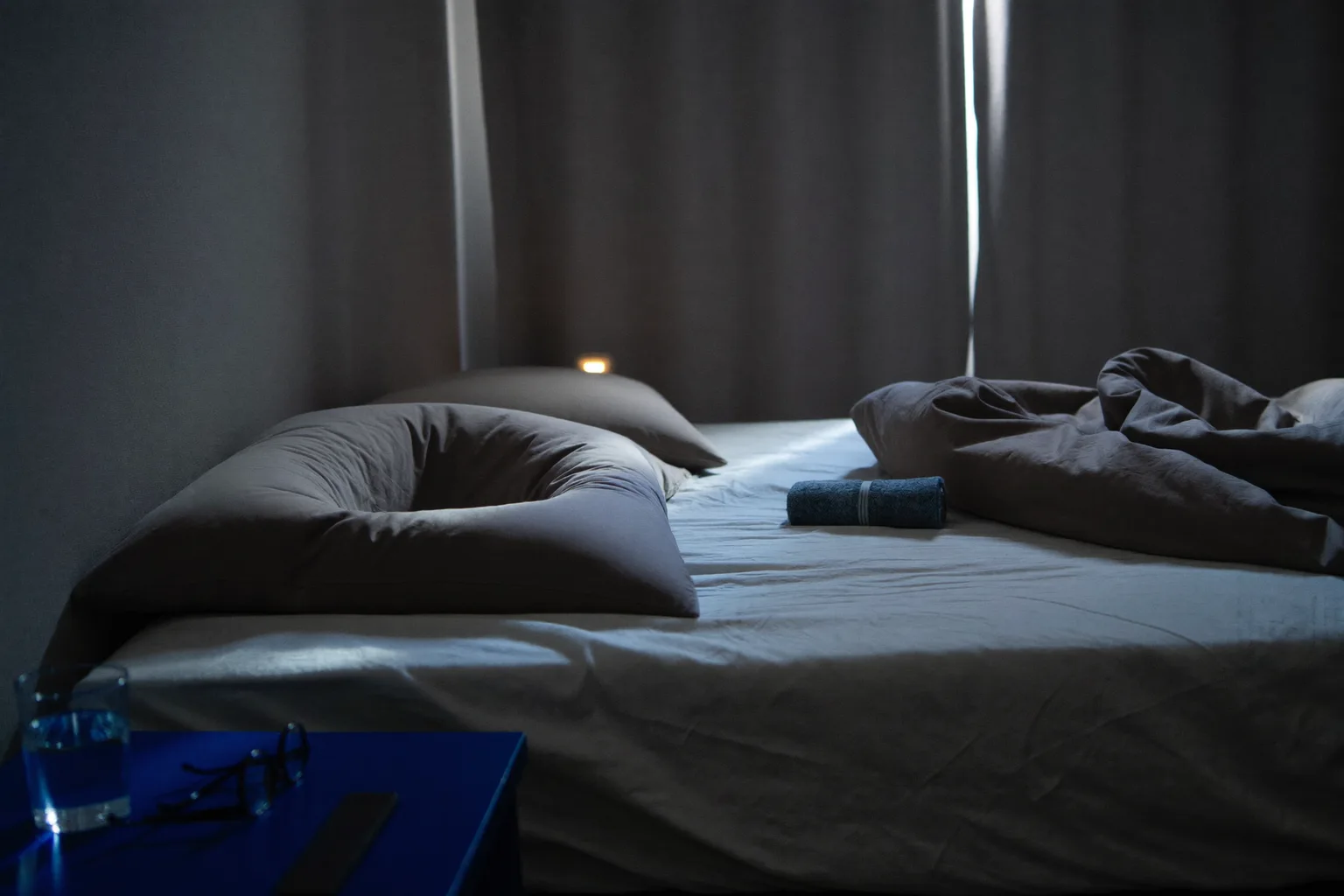
- Fill the hollow under your neck. Roll a hand towel into a sausage about the thickness of your wrist and tuck it into the bottom edge of your pillowcase, so it sits under the curve of your neck rather than under your skull. This is the single cheapest thing on the page and often the one people notice.
- Put a pillow between your knees if you are a side sleeper. It stops the top leg dragging your pelvis forward, which stops your spine twisting, which takes a surprising amount of load off the top of the chain.
- Make it easy to move. One duvet you can throw off, a bed you can turn over in, and no arm trapped under the pillow. You want to change position through the night, and anything that makes turning over uncomfortable keeps you still in one place for longer.
- Heat before bed, not cold. For the ordinary stiff, achy, muscular kind of neck pain, ten minutes of warmth on the neck and upper shoulders before you lie down relaxes the muscle enough to let you settle. Cold is for a fresh, hot, swollen injury, which is not what most desk-worker necks are.

What happened when researchers filmed people sleeping#
Almost everything written about sleeping positions comes from asking people what position they think they sleep in, which is a question nobody can answer honestly about a thing they were unconscious for. One group did it properly instead. In a 2021 study in PLOS ONE, Cary, Jacques and Briffa filmed 53 adults with infrared cameras over two consecutive nights in their own beds, then classified every posture held for a minute or more as supine, supportive side lying, provocative side lying or prone.
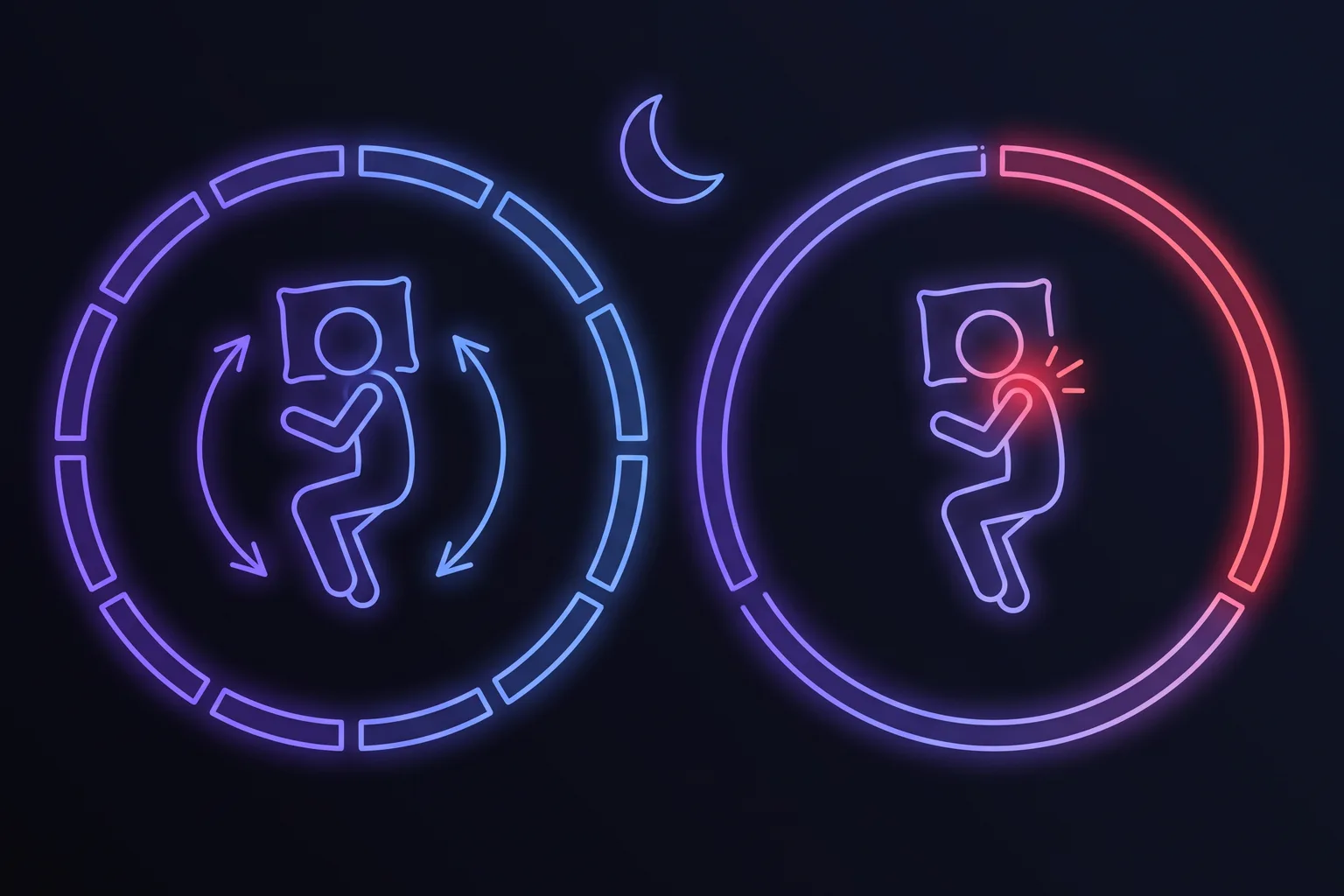
The people who woke with neck pain and stiffness did not turn out to favour a villain position. What separated them was time and stillness. They spent a median of 185 minutes a night in provocative postures against 84 minutes for the controls, and they racked up four times as many long unbroken stretches of immobility in those postures (a median of 2.0 episodes against 0.5). They also changed position more often overall, not less, which rules out the tidy story that they simply lay like statues. They moved plenty. They just spent far longer parked badly when they did stop.
That result also explains why the position advice is real but modest. A 2019 scoping review in BMJ Open by the same group concluded that side lying was generally protective against spinal symptoms, while noting there were not enough high-quality studies to answer the question properly. Sleeping on your back, which most pages recommend first, has never shown a measured advantage over side lying for waking neck symptoms. It is the default recommendation because it sounds anatomically tidy, not because anyone demonstrated it.
The pillow aisle rests on 239 people
This is the part worth knowing before you spend anything. A 2025 systematic review in Rehabilitación went looking for trials of pillows in people with chronic neck pain. It screened 29,091 records and found five studies, covering 239 participants in total. Across them, pain scores improved only slightly and not significantly, disability scores were inconsistent, and sleep quality differences were not statistically significant. The authors' conclusion is blunt: limited evidence, and no pillow type, latex, foam or standard, showing clear superiority.
An earlier review of pillow designs did find a signal in favour of latex pillows, so this is genuinely unsettled rather than debunked. But hold the two results side by side and the honest position is this: a pillow that keeps your neck level is worth having, the difference between a good twenty-pound pillow and a memory-foam contour one is not something anybody has demonstrated, and the confidence of every page recommending a specific model to you comes from somewhere other than the literature. Sleep Foundation, the top result on this query, opens with a block titled "Our Top Product Picks".
| What you can change | Worth it? | What the evidence says |
|---|---|---|
| Getting out of the front-sleeping position | Yes, first | The only position that holds the neck near its end range of rotation for hours. Consistently the one associated with more waking symptoms. |
| Pillow height matched to your position | Yes | Keeps the neck level. Mechanically sound and free, though the trials behind it are small. |
| A rolled towel under the neck curve | Yes, cheapest win | Fills the hollow a flat pillow leaves. Costs nothing and is easy to adjust night to night. |
| Switching to a specific cervical or memory-foam pillow | Unproven | Five trials, 239 people, no type superior and no significant effect on pain or sleep quality. |
| Replacing the mattress | Modest, medium-firm | Medium-firm outperforms very firm for spinal pain generally. A large spend for a small, indirect effect on the neck. |
| Protecting sleep quality itself | Yes, underrated | Sleep disturbance predicts later neck pain more reliably than pain predicts later sleep disturbance. |
| Breaking up static load during the day | Yes, underrated | Microbreaks reduce discomfort in every body region measured during computer work. Acts on the same mechanism as the night. |
How to sleep to avoid neck pain: setting the bed up once#
The tonight list gets you through the night. This is the version you set up once and stop thinking about, aimed at not waking up like this in the first place.
- Own two pillow heights, not one perfect pillow. Side sleeping needs roughly a shoulder's width of loft, back sleeping needs a fraction of it. Most people are both during one night. A thick pillow plus a thin one, swapped when you turn, solves more than any single engineered pillow will.
- Check the height with your phone, once. Lie on your side as you normally would and have someone photograph you from the front. If your nose points at the ceiling instead of straight ahead, or your head tips down towards the mattress, the loft is wrong. It takes thirty seconds and it beats a year of guessing.
- Stop stacking pillows. Two flat pillows are not a thick pillow: they hinge in the middle and push your head forward, which is the mechanical equivalent of looking at a phone all night.
- Medium-firm mattress, if you are replacing one anyway. Medium-firm supports the spine better than very firm for musculoskeletal pain in general. It is worth knowing when you next buy, and it is not worth buying a mattress for.
- Do not sleep in a chair or on the sofa "because the bed hurts". A night half upright with the head unsupported is the most reliable way to turn one bad night into a bad week.
- Give the neck something to do in the morning. Five minutes of gentle range of movement after you get up, chin tucks, slow rotations, shoulder rolls, is the closest thing to a proven intervention in this whole area: Cochrane's review of exercise for neck disorders found strengthening the neck and shoulders helps, while stretching alone mostly does not.
How to sleep with cervical neck pain that runs into the arm#
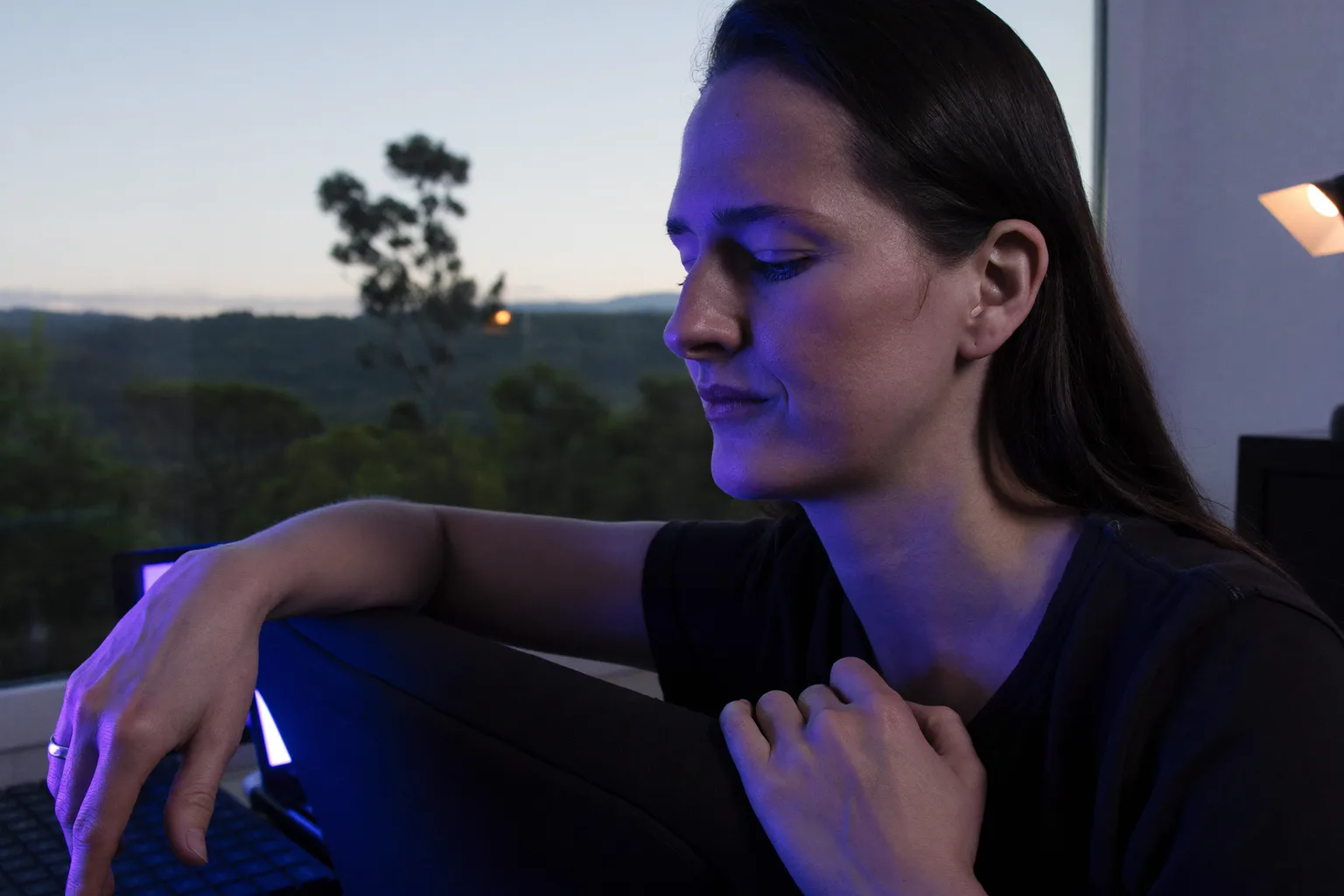
Everything above assumes ordinary mechanical neck pain: stiff, achy, worse in one direction, confined to the neck and the top of the shoulders. When the pain travels down past the shoulder into the arm or the hand, or comes with pins and needles, numbness or weakness, you are probably dealing with an irritated nerve root rather than a tired muscle, and the night rules change.
- Support the whole arm, not just the neck. Nerve root pain is provoked by traction on the nerve. A pillow under the affected forearm when you lie on your back, or hugged in front of you when you lie on your side, takes the weight of the arm off the nerve and is often the difference between two hours of sleep and six.
- Sleep on the side that does not hurt, with the painful arm resting on a pillow in front of you rather than trapped underneath or thrown overhead. Sleeping with the arm above your head is comfortable for about ten minutes and punishing by morning.
- Avoid the deep chin tuck. Piled pillows that push your chin towards your chest narrow the openings the nerve roots exit through, which is exactly the geometry you want to avoid here.
- Expect it to be worse at night and better on the move. That pattern is typical of this kind of pain, and it is worth knowing so you do not read it as the problem getting worse.
How to relieve burning neck pain at night
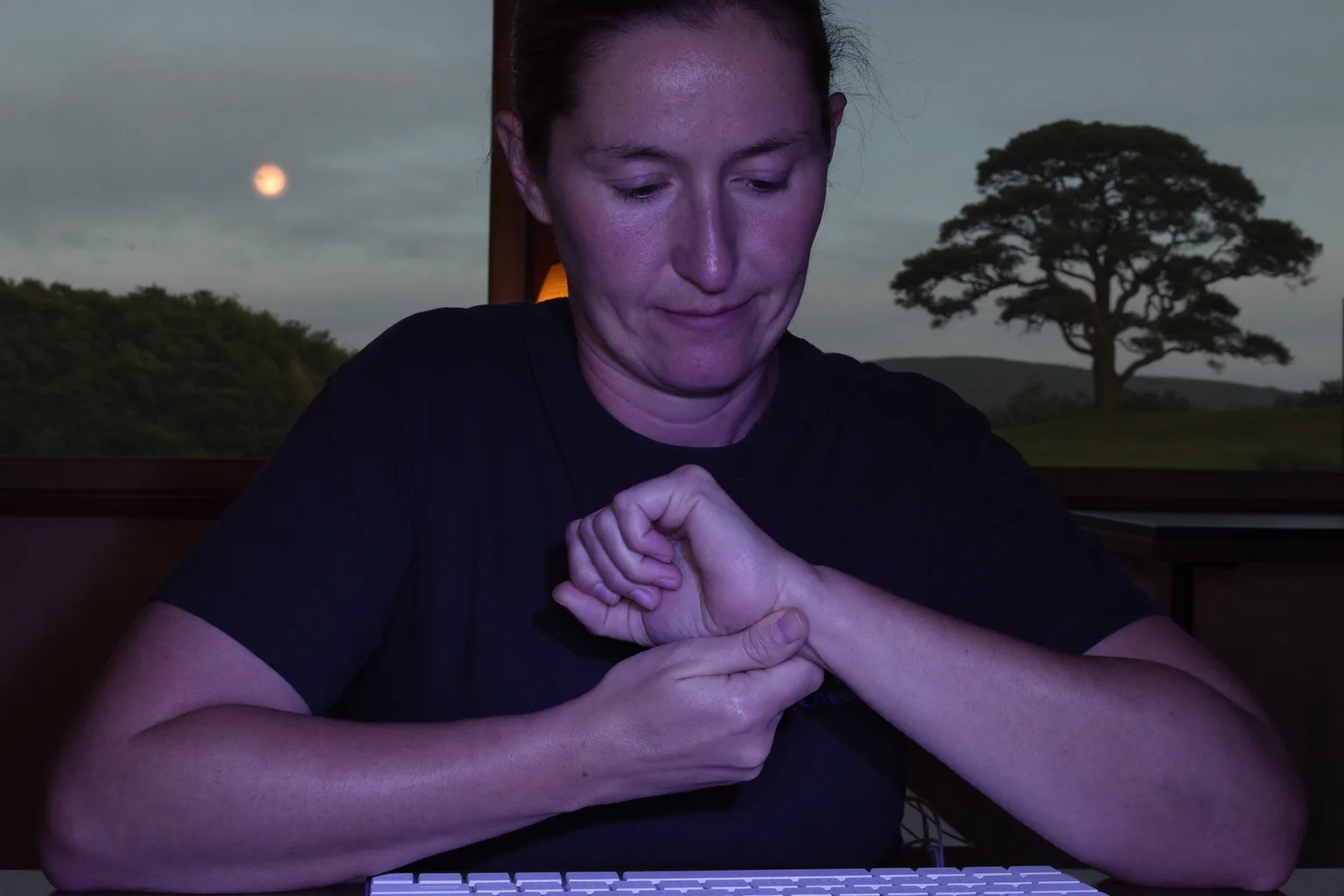
Burning is a different sensation from aching, and the distinction is useful. A dull, heavy, tight ache across the top of the shoulders is muscular and responds to warmth, movement and time. A hot, burning, electrical line that runs in a strip down the arm is more likely nerve pain, and it responds to positioning rather than to heat. If your burning stays in the neck and shoulders, treat it as muscular: warmth before bed, a supported neutral neck, and gentle movement in the morning. If it runs down the arm in a band, unload the arm as above, and if it is still there after a few weeks, or if anything is genuinely weak, that is a doctor's appointment rather than a pillow decision.
Why the night gets blamed for the day#
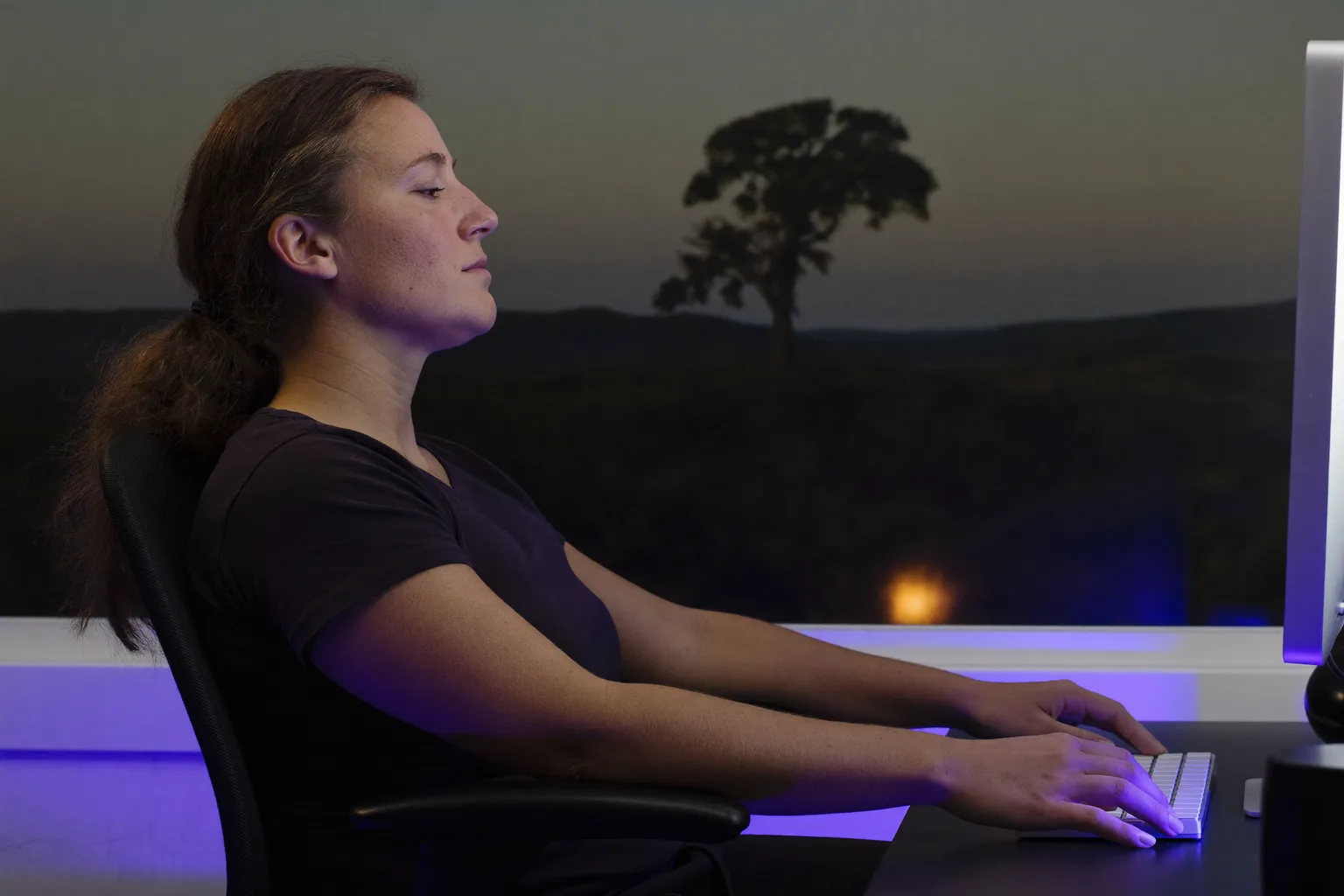
Here is the connection the sleep pages never make, and it is the reason this article exists on a site about breaks. The mechanism that showed up on those infrared recordings, long unbroken stretches of static load, is not something that only happens between midnight and six. It is what a desk day is made of. A systematic review of sedentary work and neck disorders keeps landing on duration of static posture rather than any specific angle, and the classic Applied Ergonomics study of computer work found that microbreaks reduced discomfort in every body region measured, neck included.
So a neck that has held one position for eight hours, with the small stabilising muscles fatigued and the tissue already sensitised, then gets asked to spend another eight hours holding a position. The night is where you notice it, which is why the pillow gets the blame. Test it against your own week: if the stiff mornings cluster after your heaviest screen days and disappear on holiday while you sleep on a worse mattress than your own, the bedroom was never the variable.
The lever nobody sells you: the sleep, not the bed#
Every page on this query treats sleep as the victim of the pain. The review evidence runs the other way, and more strongly. Finan, Goodin and Smith, in a 2013 review in the Journal of Pain, concluded that sleep impairments are a stronger and more reliable predictor of pain than pain is of sleep impairments. In other words, the bad night is more often the cause of tomorrow's pain than the consequence of today's.
The size of that effect is not trivial either. A three-year longitudinal study of 2,059 adults found that preceding sleep disturbance was associated with the onset of neck pain at an adjusted odds ratio of 2.47, and that the association scaled with how long the sleep problem had been running: 1.86 under a year, 3.00 past two years. Whatever protects your sleep is therefore doing more for your neck than the shelf of pillows, and it is the intervention nobody has anything to sell you for.
One honest note for Mac users, since it comes up: turning on Night Shift will not do this job. In a 2021 study in Sleep Health00060-7/abstract), 167 young adults were assigned to an evening with no phone, an evening with the phone as usual, or an evening with Night Shift on, and there were no significant differences in sleep outcomes between the three groups. What did help, in the participants who were not already sleep deprived, was not using the device in the last hour before bed. The warm screen tint is not the active ingredient. Stopping is.
When waking up with neck pain needs a doctor#
The ordinary version of this settles. A neck you slept badly on is usually much better within a few days and gone within a couple of weeks, and it does not need imaging. See a doctor rather than another pillow if any of these apply:
- Numbness, pins and needles or weakness in an arm or hand, especially if you are dropping things or cannot grip properly.
- Pain that wakes you every night or is clearly worse lying down than standing, over weeks rather than days.
- Neck pain that came after a fall, a crash or a blow to the head, which is a same-day assessment rather than a wait-and-see.
- No improvement after two to three weeks of the changes above, or pain that is steadily getting worse rather than settling.
- Fever, unexplained weight loss, night sweats, or a history of cancer alongside new neck pain.
- A stiff neck with fever, a severe headache, a rash or discomfort in bright light, which needs urgent care today: those together can signal meningitis.
- Any problem with bladder or bowel control, or unsteadiness on your feet, alongside neck symptoms.
The reassuring context: waking with a stiff neck is extremely common, most episodes resolve on their own, and neck pain that behaves mechanically (better with movement, worse in one direction, no arm symptoms) almost never turns out to be sinister. This article is general information, not medical advice.
Frequently asked questions
What is the best sleeping position for neck pain?
How do you sleep with cervical neck pain?
How do you relieve cervical neck pain at night?
How do you relieve burning neck pain?
How do I sleep to avoid neck pain in the first place?
Is an expensive pillow worth it for neck pain?
How long does a stiff neck from sleeping last?
Sources & further reading
- Cary, Jacques & Briffa, Examining relationships between sleep posture, waking spinal symptoms and quality of sleep, PLOS ONE (2021)
- Cary, Briffa & McKenna, Identifying relationships between sleep posture and non-specific spinal symptoms in adults: a scoping review, BMJ Open (2019)
- Ghosh, Goyal & Goyal, Effect of pillow on pain, disability and sleep quality in patients with chronic neck pain: a systematic review, Rehabilitación (2025)
- Finan, Goodin & Smith, The Association of Sleep and Pain: An Update and a Path Forward, Journal of Pain (2013)
- Yabe et al., Sleep disturbance is associated with neck pain: a 3-year longitudinal study, BMC Musculoskeletal Disorders (2022)
- Gross et al., Exercises for mechanical neck disorders, Cochrane Database of Systematic Reviews (2015)
- McLean et al., Computer terminal work and the benefit of microbreaks, Applied Ergonomics (2001)
- Guduru et al., The Ergonomic Association between Shoulder, Neck/Head Disorders and Sedentary Activity, Journal of Healthcare Engineering (2022)
- Ricketts et al., Does iPhone night shift mitigate negative effects of smartphone use on sleep outcomes?, Sleep Health (2021)
- NHS: Neck pain and stiff neck