Written by Alex Ren
Updated on 13 min read
How to cure dry eyes permanently: the part that is actually reversible
Quick summary There is no permanent cure for dry eye, and any page that promises one is about to sell you a procedure. That is the honest headline. The useful part is what sits underneath it: if your eyes are dry because you work at a screen, a large share of the problem is not a disease at all, it is a habit your eyes fall into within seconds of you concentrating. That share is reversible, it is free, and it is the one nobody writes about, because there is nothing to bill for it.
In this article
- Can dry eyes be cured permanently? The honest answer
- Why are my eyes so dry at a screen? The blink collapse
- How to relieve dry eyes naturally: what actually reverses it
- How to cure dry eyes naturally: which home remedies are worth it
- What eye drops do, and where they stop
- When dry eyes need a doctor rather than a habit change
- Frequently asked questions
Dry eye cannot be cured permanently. It can be managed, often well enough that you stop noticing it. That is the answer to the question, and every serious source agrees on it. What almost none of them tell you is the second half: at a screen, your blink rate does not dip, it collapses, and it takes the oil layer of your tear film down with it. Fix the blinking and you fix the part of your dryness that drops and procedures were never going to reach anyway.
Can dry eyes be cured permanently? The honest answer#
No, and the reason is in the definition. The TFOS DEWS II report, the international consensus that the whole field works from, calls dry eye a multifactorial disease of the ocular surface driven by a loss of homeostasis of the tear film. Multifactorial is the operative word: tear production, tear evaporation, eyelid mechanics, inflammation, hormones, medication and the air around you all feed into one symptom. Nothing cures a list like that in one move.
Here is the nuance that even the big medical sites flatten, though. You will read everywhere that dry eye is chronic and incurable, stated as flatly as a law of physics. The consensus report is more careful than that: it notes that dry eye is often described as chronic and progressive, but that there is currently insufficient evidence to support putting those words in the definition. That matters for you, because chronic sounds like a sentence, and the actual position of the field is closer to unsettled. Plenty of people who fix the cause stop having symptoms.
Why are my eyes so dry at a screen? The blink collapse#
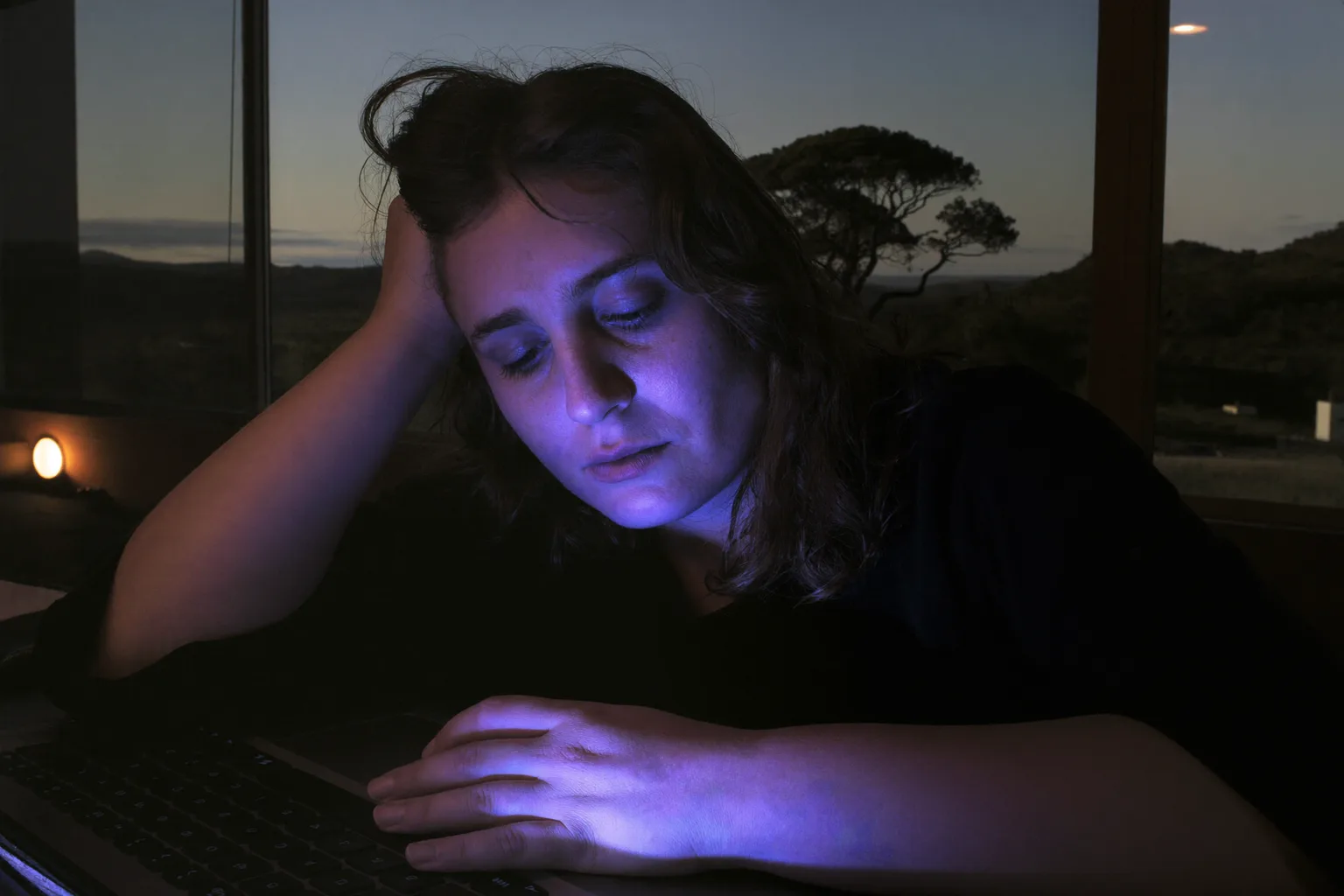
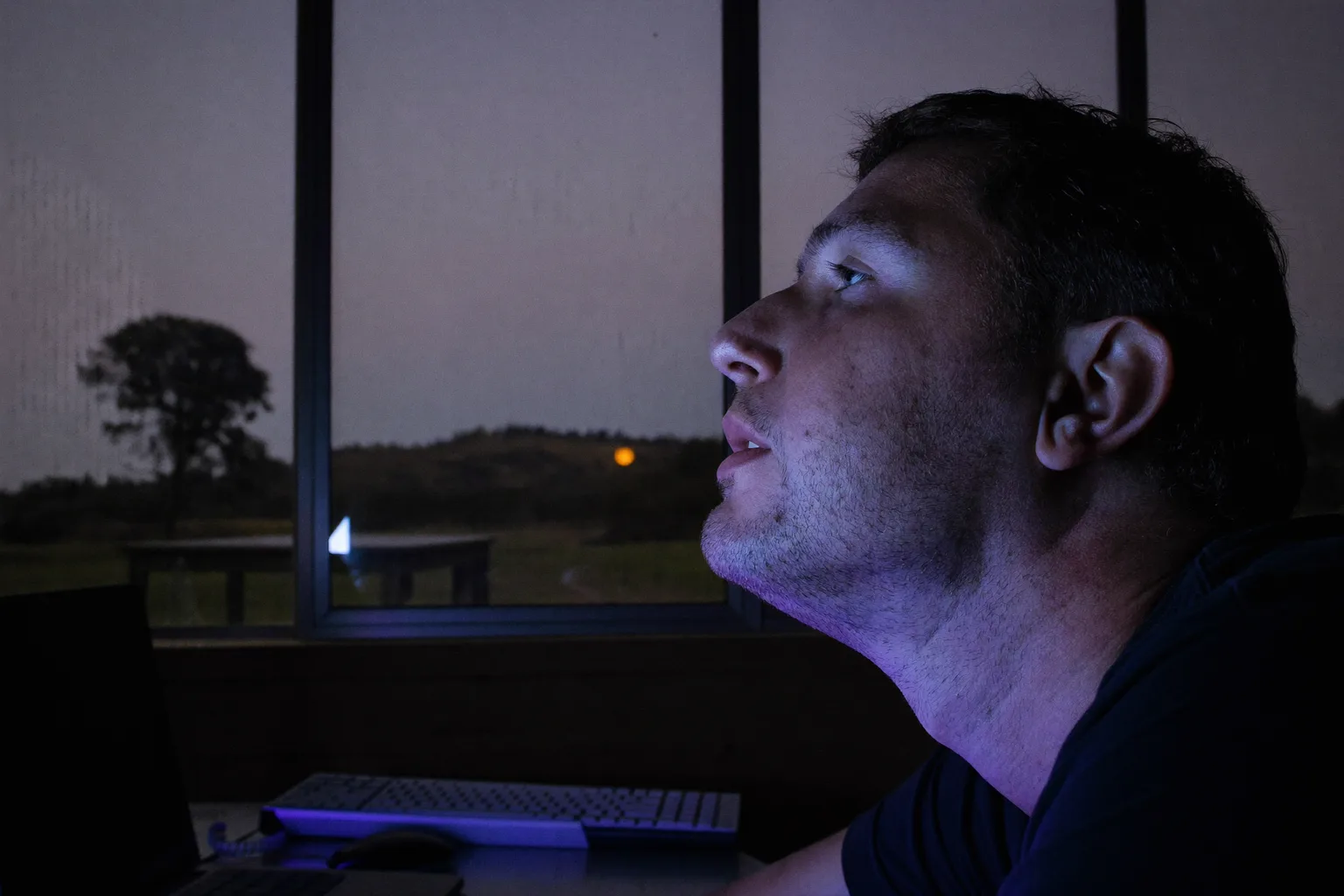
This is the mechanism, and it is worth reading slowly, because it is what makes the free fixes work. A relaxed adult blinks roughly 15 to 22 times a minute. Put that same person in front of a screen and the rate falls off a cliff. In one measurement cited in a 2025 review of screen-related dry eye, blink rate went from a baseline of 18.4 blinks a minute down to 3.6 during computer use. In another, office workers dropped from 22 a minute at rest to 7 once they were working on a screen. That is a two-thirds to four-fifths reduction, and it happens without you noticing, because concentration is what triggers it.
Every blink you skip is a coat of tear film you did not spread. The surface stays exposed for longer, evaporation wins, the tears left behind get saltier (the hyperosmolarity in that consensus definition), and the salty film irritates the surface it is supposed to protect. That is the burning, gritty, sandy feeling by mid-afternoon. It is not your office being dry, or not mostly: it is you, not blinking, for hours.
The half-blink problem, and why the oil matters
It gets one step worse, and this is the part that no page ranking for this query explains. Under screen load you do not just blink less, you blink incompletely: the lid comes most of the way down and goes back up without ever fully closing. That matters because a full blink is what squeezes the meibomian glands along your lid margin, and those glands secrete the oil that caps your tear film and stops it evaporating. Half-blinks do not press them properly.
The consequence is a slow one. The same review reports that people with a higher proportion of incomplete blinks have a measurably faster tear break-up time and worse symptom scores, and that persistently poor blinking is associated with meibomian gland dropout, meaning the glands themselves atrophy from disuse. Thinner oil layer, faster evaporation, more dryness, which makes you squint and blink even less. That is the loop. It is also why a bottle of drops can feel like it stops working: it tops up the water, and your problem has moved to the oil.


How to relieve dry eyes naturally: what actually reverses it#
Everything below is free, and it is ordered by how much of the screen-driven problem it addresses. This is the natural-remedy section, but sorted honestly rather than padded to thirteen items.
- Blink properly, on purpose, several times a day. Close your eyes fully and slowly, ten times, letting the lids meet without forcing them shut. This is the one thing aimed directly at the mechanism above: it resurfaces the film and expresses the oil glands. It costs fifteen seconds and it is the highest-yield item on this page.
- Break your near focus regularly. The 20-20-20 rule (every 20 minutes, look 20 feet away for 20 seconds) is the usual formulation, and looking away is what makes you blink normally again. Be aware the exact numbers are a memorable prescription rather than a validated dose, which we cover honestly in that article. The breaking of the stare is the active ingredient, not the arithmetic.
- Warm compress on the lids, if mornings are gritty. A warm flannel held over closed lids for a few minutes softens the meibum so the glands can actually empty. This is the standard first-line treatment for the oil side of the problem, and it is the same physics the expensive in-clinic devices are selling.
- Drop the screen below your eye line. The American Optometric Association puts the centre of the monitor about 15 to 20 degrees below eye level. Looking slightly down narrows the opening between your lids, which means less exposed surface and less evaporation, all day, for free.
- Move the air, not the eyes. Redirect the aircon vent, the fan or the car heater away from your face, and add humidity in winter. Airflow across the eye is a genuine evaporation multiplier, and it is the one environmental factor worth acting on.
- Check what you are taking. Antihistamines, some antidepressants, beta blockers, isotretinoin and hormonal contraception all reduce tear production. If your dryness arrived suddenly and a new prescription arrived around the same time, that is a conversation with the prescriber, not a reason for a different eye drop.
How to cure dry eyes naturally: which home remedies are worth it#
The natural-remedy lists on this query run long because length ranks, not because thirteen things work. Here is the same territory, rated by what the evidence supports:
| Remedy | Does it help? | What it actually does |
|---|---|---|
| Deliberate full blinking | Yes, most of all | Resurfaces the film and expresses the oil glands. Targets the actual cause of screen dryness. |
| Warm compresses | Yes, for the oil side | Softens meibum so blocked glands can empty. First-line care for meibomian gland dysfunction. |
| Regular screen breaks | Yes | Restores a normal blink rate and lets the surface recover. Works by removing the cause. |
| Humidifier, redirecting vents | Modest but real | Slows evaporation. Helps most in dry winter air or under aircon. |
| Omega-3 supplements | Unclear | Popular and plausible, but the large DREAM trial found no benefit over placebo. Not a first move. |
| Drinking more water | Only if dehydrated | Severe dehydration reduces tear volume. Beyond that, more water does not make more tears. |
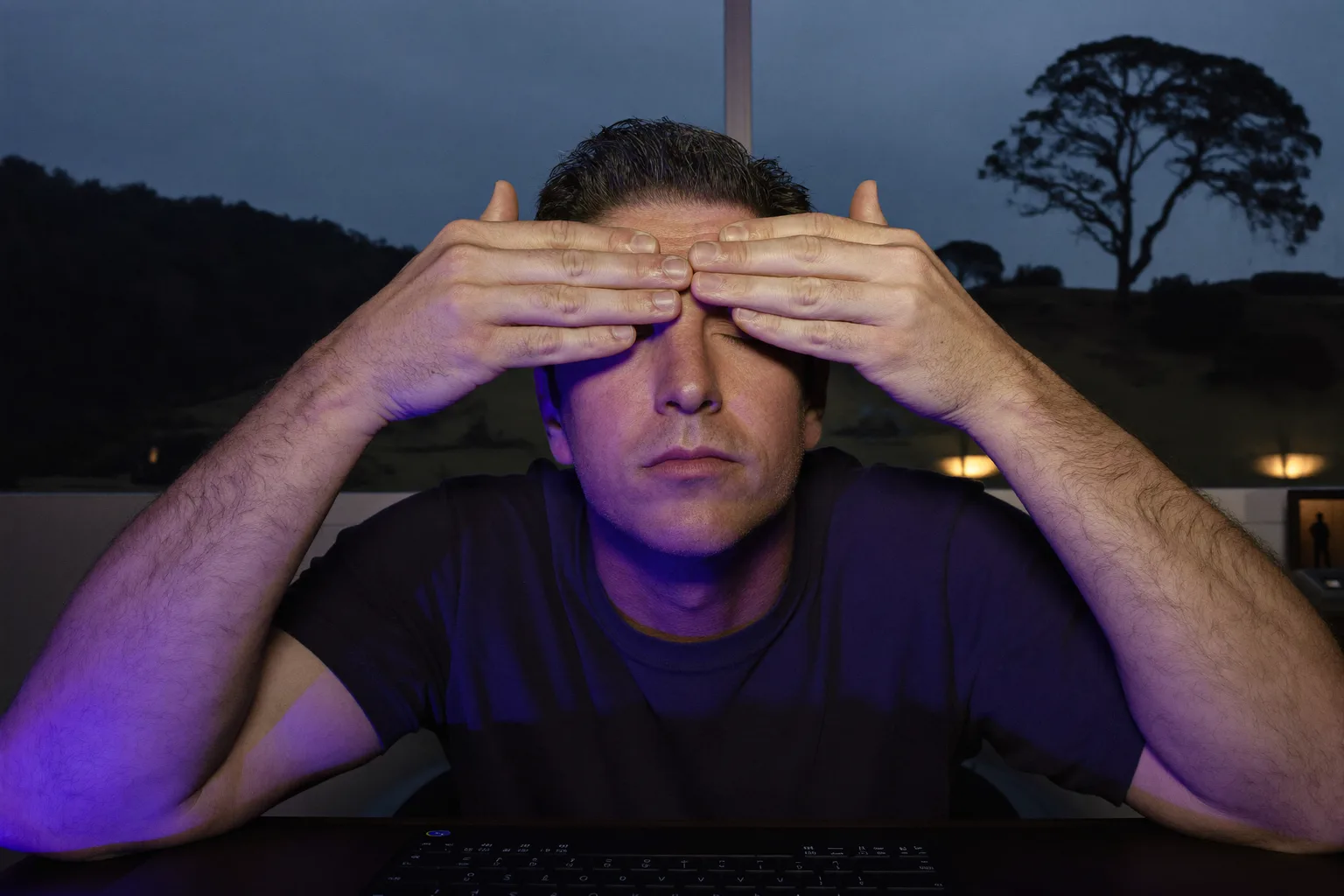
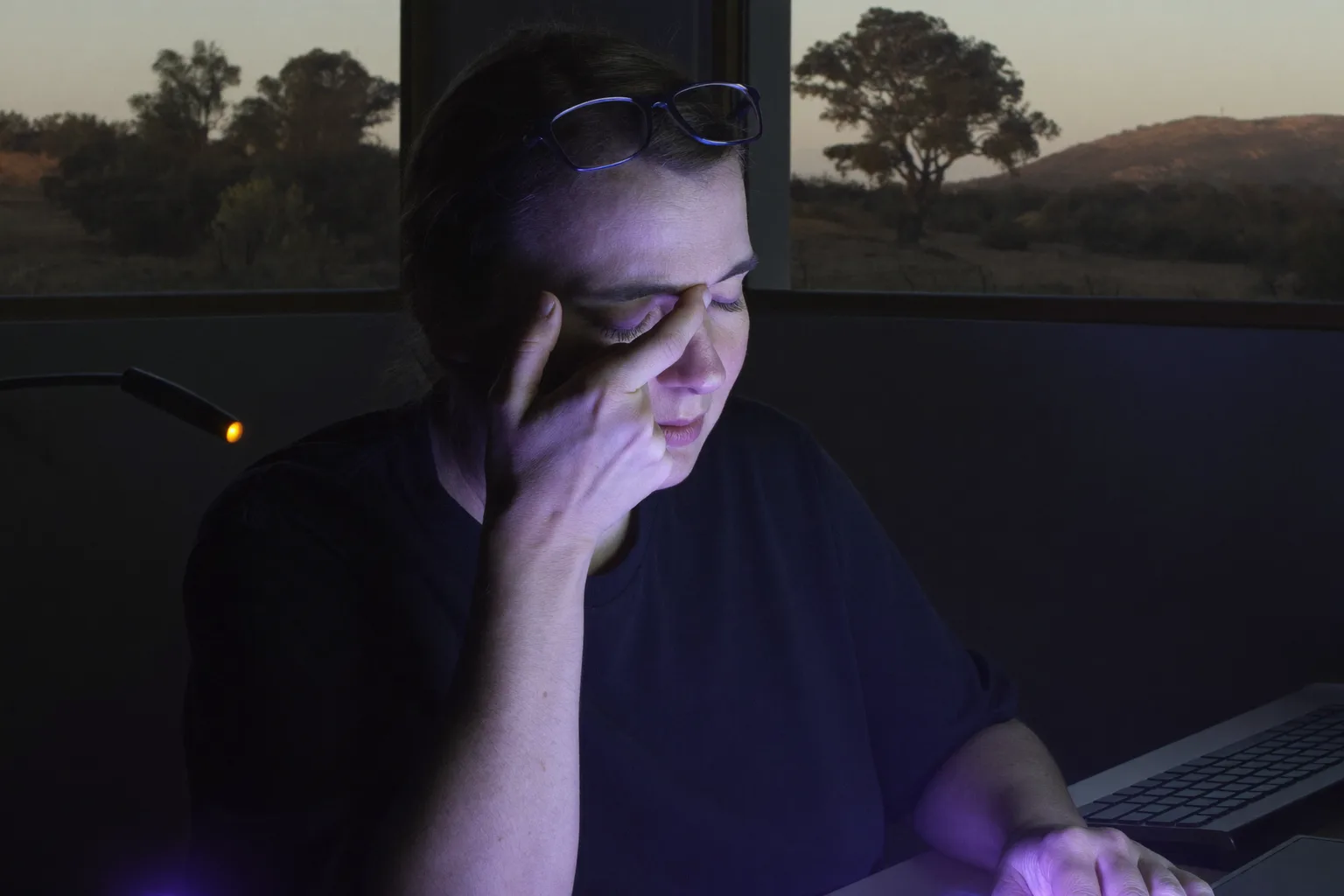
| Rubbing your eyes | No, actively harmful | Feels good for a second, inflames the lid margin and worsens the film. The one to stop doing. |
What eye drops do, and where they stop#
Artificial tears are worth having, and they are not a cure. They top up the watery layer your blinking is failing to renew, which is real relief and lasts about as long as the drop does. Two practical notes: choose plain lubricating tears rather than the redness-removing kind, which shrink blood vessels and do nothing for the film, and go preservative-free if you use them more than about four times a day, because the preservative itself irritates the surface over time. If you want the fuller version of the drops aisle, it is in our guide to why eyes feel heavy.
Beyond drops there is a real medical ladder: prescription anti-inflammatories such as cyclosporine or lifitegrast, punctal plugs that keep your own tears on the eye for longer, in-office gland treatments, and scleral lenses in stubborn cases. These work, and none of them is a permanent cure either. They are also the entire content of most pages ranking for this query, which should tell you something about who writes them.
When dry eyes need a doctor rather than a habit change#
Most screen-related dryness responds to the changes above within a couple of weeks. Book an eye exam instead of buying another bottle if any of these apply:
- The dryness does not improve after two or three weeks of real breaks, deliberate blinking and warm compresses.
- You need drops more than four to six times a day just to get through it.
- There is genuine eye pain, light sensitivity that is new, or redness that does not settle overnight.
- Your vision is changing, or blur no longer clears when you blink.
- You also have a dry mouth, dry skin or joint pain, which together can point to Sjögren's syndrome and deserve a proper workup.
- The dryness arrived suddenly and lines up with a new medication, an illness or eye surgery.
One reassurance, because it is the fear behind a lot of searching: ordinary dry eye does not blind you. Left untreated for years, severe dry eye can scar the cornea and affect vision, which is exactly why the list above exists, but that is the far end of a long road and not where a screen worker with gritty afternoons is standing. This article is general information rather than medical advice.
Frequently asked questions
How do you cure dry eyes permanently?
How do you cure dry eyes permanently naturally?
How do I relieve dry eyes naturally?
What does dry eye feel like?
Why are my eyes so dry all of a sudden?
Can dry eyes cause blindness?
How do I know if I have dry eyes?
Sources & further reading
- TFOS DEWS II: Definition and Classification Report
- Digital Applications for Videoterminal-Associated Dry Eye Disease, J. Clin. Med. (2025)
- National Eye Institute: Dry eye
- American Academy of Ophthalmology: How to Say Bye to Dry Eye
- American Optometric Association: Computer vision syndrome
- DREAM Study Research Group, n-3 Fatty Acid Supplementation for the Treatment of Dry Eye Disease, NEJM (2018)